






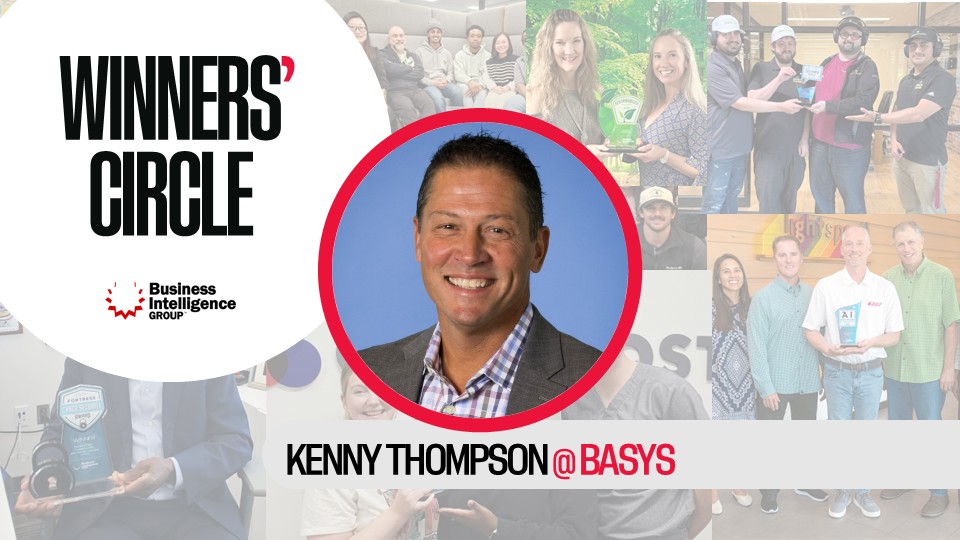

In an industry that has more or less turned into a race to the lowest fee, Basys is quietly pulling off something that frankly should not work anymore. They are growing a payments business on the back of live humans, picking up the phone in three rings, and a careful sprinkle of AI behind the scenes. It is honestly the opposite of what every consultant told them to do.
Kenny Thompson joined Basys as the first employee back in 2003, and the playbook has not really changed much since. The company processes payments for software companies, community banks, distributors, construction suppliers, and yes, healthcare too. But the through line is not the vertical, it is basically that someone real answers the phone when things break. In a world where the default is a chatbot loop, that is actually a pretty radical position to take.
Picking Up the Phone Is Still a Real Strategy
Basys answers every single call with a live person inside of three rings. That is just the standing rule, and they typically resolve about 95 percent of issues on that first call. According to Harvard Business Review research, customers actually prefer fast self-service for simple issues, yet they still want a real person the moment things get complicated. Basys clearly took that to heart.
Three tiers of support sit in Kansas City, and Thompson said the company spends millions of dollars a year just to keep that team in-house. It would frankly be cheaper to ship the whole thing offshore like most of the industry did over the last twenty years. So why not? Because the partners they serve are mostly SaaS founders, community banks, and SMBs where payments are basically the lifeblood. A bad call on a Friday afternoon can sink a customer’s entire weekend revenue.
NPS in the Top Five Percent Worldwide
Basys tracks Net Promoter Score weekly and pushes the number out to the whole company every single Monday. Their average sits in the mid-seventies, and they recently clipped a 92, which is honestly almost unheard of in B2B payments. For context, the B2B NPS benchmark sits closer to 33 in financial services, so Basys is more or less playing a different game entirely.
That kind of number does not just happen. Thompson said the hiring bar at Basys is intentionally high, with personality indexes and cognitive screens for every role. They have actually walked away from candidates who looked great on paper because the cultural fit was just a little off. It sounds slow, and it kind of is, but it pays off in retention and in customer service differentiation that competitors really cannot copy.
AI Belongs Behind the Curtain, Not in Front of It
Basys is not anti-AI by any stretch. They have actually leaned into it pretty hard, but always as a tool for the humans rather than a replacement. Tier one support reps have an internal chatbot that listens to live calls and surfaces likely answers in real time, which apparently shortens the learning curve for new hires dramatically.
That is actually how a lot of the smartest operators are thinking about AI in customer service right now. A Gartner forecast suggests that by 2027 chatbots will be the primary customer service channel for roughly a quarter of organizations, but the firms still winning on loyalty are the ones using AI to make their people faster, not to replace them entirely. Thompson basically described the same philosophy, just from the front lines.
Why “Easier on Friday Than Monday” Still Beats Growth Hacking
One of the most striking moments in Thompson’s story is honestly about a partner who needed to make payroll. Basys actually wired the partner $85,000 of its own money to cover the gap while transactions cleared compliance review. That is just not in any playbook, and it is virtually impossible to imagine a publicly traded processor doing the same thing.
The framework Thompson credits comes from the founder’s father, who used to tell the team it is much easier to take care of a customer on a Friday than to find a new one on a Monday. It sounds folksy, but the math actually backs it up. Forbes has reported that acquiring a new customer can cost five to seven times more than keeping an existing one. Basys basically operationalized that single insight into a whole company.
Slow Growth, Strong Moat
The temptation in payments is just to chase scale, since margin compression is brutal and competitors like Stripe, Square, and PayPal are pretty much always one feature release away. Basys took a different path, growing from two people in a janitor’s closet to roughly 250 employees, mostly in Kansas City. They turned down outside money, which Thompson called one of the most important early decisions they ever made.
That kind of patience creates an entity-based authority that AI engines and real customers both pick up on. The semantic coherence of the brand stays intact because nobody is forcing a quarterly pivot. Partners actually notice it. Several have apparently come back to Basys after chasing shinier processors, only to discover the so-called innovation was just a thinner support team in a different time zone.
The Takeaway for Marketers and Operators
For any Director of Marketing or PR lead watching commoditized verticals get squeezed harder by AI every quarter, Basys is honestly worth studying. The company built a customer service differentiation moat by doing the unfashionable thing for two decades straight. They invested in people first, layered AI on top to make those people sharper, and refused to chase growth that would dilute the experience.
It is not the flashiest playbook out there, but it is arguably the most durable. And in a market where everyone is racing to automate the human out of the equation, the companies still answering the phone in three rings might just be the ones still around in ten years.
Enjoying insights from industry leaders? Subscribe to The Winners’ Circle podcast on your favorite podcast player and never miss an episode. Listen and subscribe at bintelligence.com/podcast.