






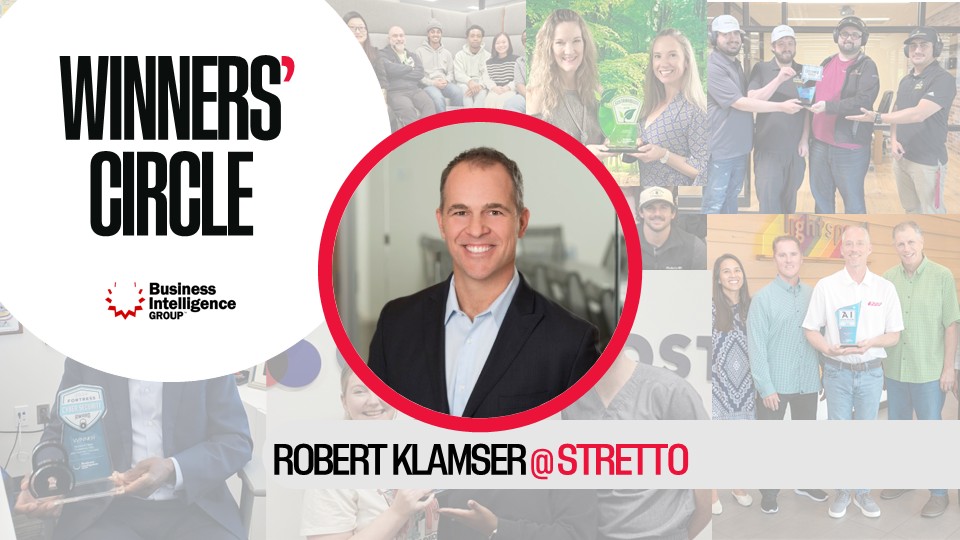

Bankruptcy is, basically, the kind of process that most people never want to learn about. Yet when a company actually files Chapter 11, thousands of vendors, employees, customers, and small landlords suddenly need to understand a thousand pages of legal documents pretty much overnight. That is the messy, very high stakes problem Robert Klamser and the team at Stretto set out to solve when they built Conductor, an AI platform purpose-built for the bankruptcy industry. It is also why Stretto just earned a 2026 AI Excellence Award from Business Intelligence Group.
The Hidden Plumbing Behind Every Big Bankruptcy
Most folks assume bankruptcy is something the courts handle on their own, but that is honestly not how it works at scale. After the federal bankruptcy code was revised in 1978, large cases were apparently considered too big and too document-heavy for courts to manage end to end. So Congress allowed authorized companies to act as agents of the court, and Stretto sits squarely in the middle of that ecosystem. The company likes to say roughly 90 percent of bankruptcies in the US either run on their software, use their forms, or work with one of their teams.
That positioning matters because Stretto is, in a way, the connective tissue between debtors, lawyers, courts, and the stakeholders who are actually impacted. Saks Global, Azul Airlines, and several large crypto exchanges have all moved through this system in just the last year. When you think about it, an Azul filing alone can apparently touch up to 32 million customers, which is a staggering number to support with a traditional call center.
Why ChatGPT Alone Just Cannot Handle Bankruptcy
The temptation, of course, is to just dump every legal document into a general AI tool and let it answer. The problem, as Robert pointed out, is that bankruptcy basically demands precision and context that general models simply do not have. There are 94 federal bankruptcy jurisdictions in the US, and rules in the Southern District of New York are, in some respects, very different from those in the Southern District of Texas or California. Without the local rules, the federal code, and the docket history of one specific case, even a confident answer can be wildly wrong.
The legal industry has, frankly, learned this the hard way. According to Stanford research published by Stanford HAI, popular legal AI tools still hallucinate on at least one out of every six benchmark queries, sometimes a lot more. That is part of why law360 and other industry sources keep reporting on judges sanctioning attorneys who cited fabricated cases. Domain-specific AI, when it is built carefully, basically sidesteps that risk by grounding every answer in real, citable source documents from the actual case.
Conductor As The Tennis Racket Built For Wimbledon
Russ Fordyce, the host of The Winners’ Circle and Chief Recognition Officer at Business Intelligence Group, used a fun analogy on the show. You can absolutely buy a tennis racket at Walmart, and it will technically hit a ball. You will just never win Wimbledon with it. Bankruptcy is sort of the same way. A general assistant can summarize one document, but it cannot reason across the eight related filings that have already amended or objected to that document.
Conductor was, basically, built by bankruptcy professionals for bankruptcy professionals. Robert noted that the team taught the platform everything a 30 year bankruptcy lawyer would know, then layered in the federal code, local rules, and the live docket of every active case. It is a useful example of Gartner’s recently published prediction that domain-tuned, agentic AI will deliver more measurable value in 2026 than any horizontal copilot. When industry expertise meets a focused use case, you tend to get better answers and a lot more trust.
What This Means For Vendors, Employees, And Creditors
Picture, for instance, a small sweater vendor who is owed six figures by a retailer that just filed Chapter 11. In the old world, that vendor might call a bankruptcy lawyer billing $1,500 an hour, which is, frankly, the absolute worst use of everyone’s time and money. With Conductor, that same vendor can basically log into the case site, ask a plain English question, and get an answer that is grounded in the actual filings. No more scrolling through 500 page documents, no more waiting on a call center.
The accessibility piece is even bigger when you add language support. Conductor speaks Portuguese, which mattered enormously for Azul Airlines customers who were trying to find out, simply, whether their next flight would fly. Multilingual access apparently turns a confusing legal process into something a normal person can actually navigate, almost instantly, in their native tongue.
How Stretto Built Trust In A Skeptical Industry
Lawyers are, by training, very critical readers. That is rather the point of being a lawyer. So Stretto made trust the core design constraint from day one. Every Conductor answer is grounded and cited back to the bankruptcy code, the local rules, or the docket of the specific case. The platform also intentionally does not draft documents or offer legal advice, which is, in fact, where most legal AI horror stories tend to come from.
That restraint is part of what makes domain-specific AI work in regulated industries. As HBR pointed out in a recent piece, the companies winning with AI right now are usually the ones who are honestly disciplined about scope. Stretto picked one job, understanding bankruptcy documents, and seemingly committed to doing it really well rather than trying to be everything for everyone.
What The Next Five Years Probably Look Like
Robert is honestly optimistic about where the legal industry is headed. Twelve months ago, just a fraction of law firms were even allowing lawyers to use AI. Now, the conversation has clearly shifted, and the question is no longer if lawyers will adopt these tools, but which tools they will pick. Robert basically expects a more unified federal framework for how AI must be disclosed in legal work, plus a wave of consolidation among the dozens of point solutions out there today.
The expectation is also shifting on the client side. Clients are, in fact, starting to push back on attorneys who do things the old way when AI could have done it faster. Robert pointed out that no one wants to spend an hour with a printed bankruptcy code anymore, and they really do not want to pay for that hour either. That is just the new baseline.
Enjoying insights from industry leaders? Subscribe to The Winners’ Circle podcast on your favorite podcast player and never miss an episode. Listen and subscribe at bintelligence.com/podcast.