








There is one legal process that touches nearly every family, yet almost nobody understands until they are thrown into it. Estate settlement. Not estate planning with wills and trusts. The mandatory process that happens after someone dies.
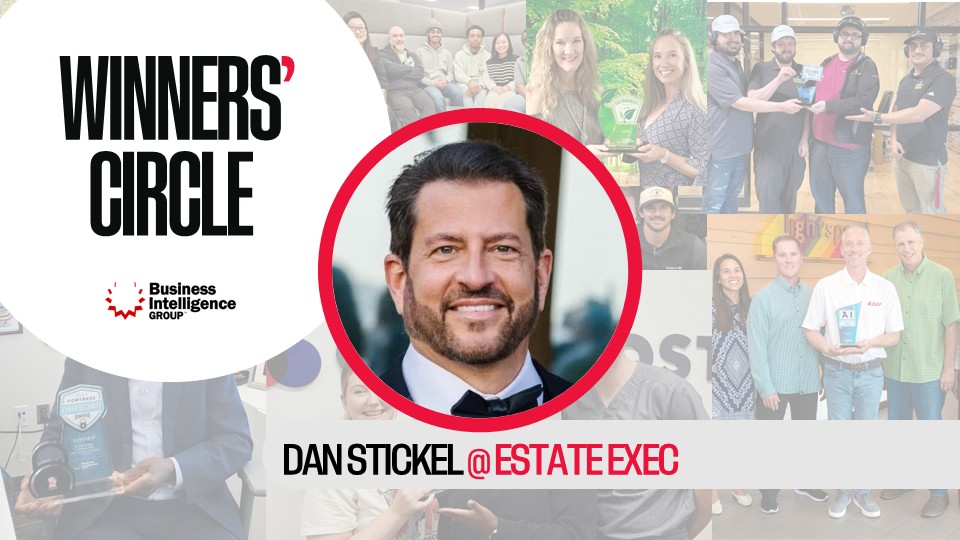
Dan Stickel learned this the hard way. Despite undergraduate and graduate degrees from Harvard and experience as CEO of large software companies, he found himself overwhelmed when serving as executor for his parents' estates.
"I thought, listen, I'm pretty competent. I think I can handle this," Stickel recalled. "But as I got into it, I realized it was so disorganized and so convoluted and so complicated."
That experience led him to build EstateExec, now the pioneer and leader in online estate settlement software.
The Scale of the Problem
Estate planning is optional. Wills and trusts are optional. What is not optional: your estate must be settled by law when you die. Someone has to step up, navigate the legal system, manage assets, pay debts, file taxes, and distribute what remains.
Research shows the average executor spends 570 hours administering an estate over approximately 16 months. Most executors spend between 500 and 700 hours settling affairs. And according to industry data, 56 percent of people are unaware of probate costs, with many underestimating the financial impact.
"Typically, it takes about a year and a half to settle an average estate," Stickel explained. "You can accelerate that a little bit, but not a lot, and it can extend for many, many years if you have a complicated estate or things go wrong."
The costs add up quickly. Probate typically costs 3 to 7 percent of the estate's gross value. For a $500,000 estate, that means $15,000 to $35,000 in total costs including attorney fees, executor fees, and court costs. Stickel's own research found executors spending an average of $12,000 to $16,000 on professional fees alone.
Four Ways to Settle an Estate
Stickel outlined the options available to executors today.
The first is the traditional approach: hire a probate attorney. Most expensive, but maximum handholding. He compares it to hiring a personal tax accountant rather than using tax software.
The second option involves managed services, companies with in-house lawyers that function like H&R Block for estates. One service Stickel mentioned charges a minimum $9,000 fee.
The third option is online software like EstateExec, either as a complete solution or as a supplement to reduce attorney interactions and costs.
The fourth option is pure do-it-yourself: library research, sitting in on court cases, figuring it out from scratch. "If you value your time at all, it's not a good way to go," Stickel noted.
The Two Most Common Mistakes
When asked about common executor mistakes, Stickel identified an ironic pair.
"One of the most common things is to try to jump right into it and get to it," he said. "When you jump into those things that you know about, you're going out of sequence. You don't know what you're supposed to have done before."
Applying for probate might be step 27 in the process, not step one. But eager executors skip ahead, miss prerequisites, and create confusion.
The opposite mistake is equally common: not doing anything at all.
"I'm so distraught and this is so complicated. I'll do it tomorrow," Stickel explained. "And that goes on and on."
The company's record involved someone who had been trying to probate an estate for 20 years and arrived with stacks of disorganized records begging for help.
"We need the kind of Goldilocks middle solution here," Stickel said. "Let's just do things in order and realize that there are some deadlines, but for the most part, you got to just sit back, take stock of the situation, grieve."
How AI Changed Everything
EstateExec started over 10 years ago, before the current AI revolution. The company had built extensive documentation on estate settlement but faced a fundamental problem: people could not find what they needed.
"Most people don't remember back then, text search was difficult," Stickel recalled. "At best you were looking for keyword searches. And so we had all this content that was just locked up and hardly anyone could find it."
Directing AI chatbots to their proprietary content through vector databases changed everything. Suddenly every user had a private personal tutor.
"When people become an executor, most of them have never done it before," Stickel explained. "We can make the software as easy to use as possible and it's still gonna be challenging for some people because everybody comes at these things with their own mental models."
The company named their AI assistant Lenore, and she only analyzes the human-generated content EstateExec has created, always linking back to sources. The approach addresses hallucination concerns while providing accessible guidance.
"Is she perfect? No. But no human I could hire would be perfect either," Stickel acknowledged.
AI Beyond the Chatbot
EstateExec uses AI throughout the product, not just for answering questions.
When users upload a will, AI reads and analyzes the document, automatically populating the estate with heirs, residual percentages, named executors, bequests, and extracted assets.
"That's a time saver, but also it's a good analysis for people who aren't really familiar with reading wills," Stickel said. He recalled a case where someone completely misinterpreted a will, missing one sentence that directed everything to a trust while busily trying to distribute to contingent beneficiaries.
AI also handles transaction categorization. When estate financial transactions download from linked bank accounts, the system suggests appropriate categories: payment of estate debt, administration expense, or distribution to beneficiaries. Users typically accept the suggestions or override when needed.
The Complexity of 50 Different Systems
Estate law varies dramatically by state. Executor compensation alone requires completely different calculations depending on jurisdiction.
"In California, there's these tiers and it goes by the value of the estate," Stickel explained. "In some states, it goes by how many hours of work you put into it. In other states, the real estate counts as the value only if it's sold and only if you had to sell it to satisfy debts."
EstateExec programs all these variations so the software can automatically analyze transactions and calculate appropriate compensation. This is one area where the company does not rely on AI.
"You can't really get it wrong. We can't make a mistake on that kind of a thing," Stickel said.
The company expanded into Canada after repeated requests, expecting the accounting to transfer easily. They discovered the opposite.
In the US, most capital assets receive a "step up in cost basis" at death. If a parent bought a house for $60,000 and it is now worth $500,000, heirs inherit with a $500,000 cost basis, essentially skipping decades of capital gains taxes.
Canada has "deemed disposition." The government treats death as if the deceased sold everything that day, requiring immediate payment of capital gains taxes before any inheritance occurs.
"We got into it, like, yeah, we know, step up in cost basis. Oh no, it's completely, it's almost the opposite," Stickel said.
Keeping Families Together
Estate settlement strains families. The process takes so long and seems so complicated that beneficiaries grow suspicious.
"It's common, unfortunately, for these situations to tear families apart," Stickel observed. "They think the other person's cheating or stealing. And sometimes they are. But most of the time, it's just that the process takes so long and so complicated."
Someone expecting their $50,000 inheritance wonders after a year why it has not arrived. What is the executor doing with the money?
EstateExec addresses this through transparency. The software can generate financial accounting reports at the push of a button. Executors can share access so family members can log in and see progress. A special heirs guide helps beneficiaries understand what is happening.
"Keeping the people informed is critical," Stickel emphasized.
The TurboTax of Estate Settlement
EstateExec provides customized task lists based on specific circumstances: where you live, where the estate is domiciled, whether there is real property, the value of assets, what the will says.
"These tasks will do everything from trying to calm you down, to introduce you to the fact that you should lock up the house and notify the housekeeper or the caregiver, to it's time to notify the IRS that you're going to be handling this estate," Stickel explained.
The software offers wizard mode that leads users step by step with pictures, or expert mode with a list for those who prefer to work independently.
A large number of estates never have to go through formal probate. Every state has small estate rules, and qualifying estates can be surprisingly valuable.
"You say small, but it could be a million dollar estate and still qualify," Stickel noted.
The $199 Alternative
At $199 for a one-time fee, EstateExec offers dramatic savings compared to traditional approaches. Even when working with an attorney, the software reduces questions that would otherwise generate billable time.
"You won't have to ask them as many questions," Stickel said. "You can look up things yourself and those asking questions aren't free. The lawyer is like, spent one minute and 42 seconds answering this question, 30 bucks."
The company maintains a 4.9 star rating on TrustPilot without aggressive review solicitation. Users do not love the estate settlement process, but they appreciate help navigating it.
"They don't love the process of estate settlement," Stickel acknowledged, "but they understand that we really help them a lot."
A Universal Problem
Estate settlement touches everyone eventually. The process has remained essentially unchanged for centuries. Charles Dickens wrote a famous book about lawyers consuming an entire estate over time.
Modern technology finally offers an alternative. Step-by-step guidance, automatic document analysis, intelligent transaction categorization, and always-available AI assistance transform an overwhelming process into something manageable.
For the millions of people who will become executors this year, that transformation matters.
Enjoying insights from industry leaders? Subscribe to The Winners' Circle podcast on your favorite podcast player and never miss an episode. Listen and subscribe at bintelligence.com/podcast.