






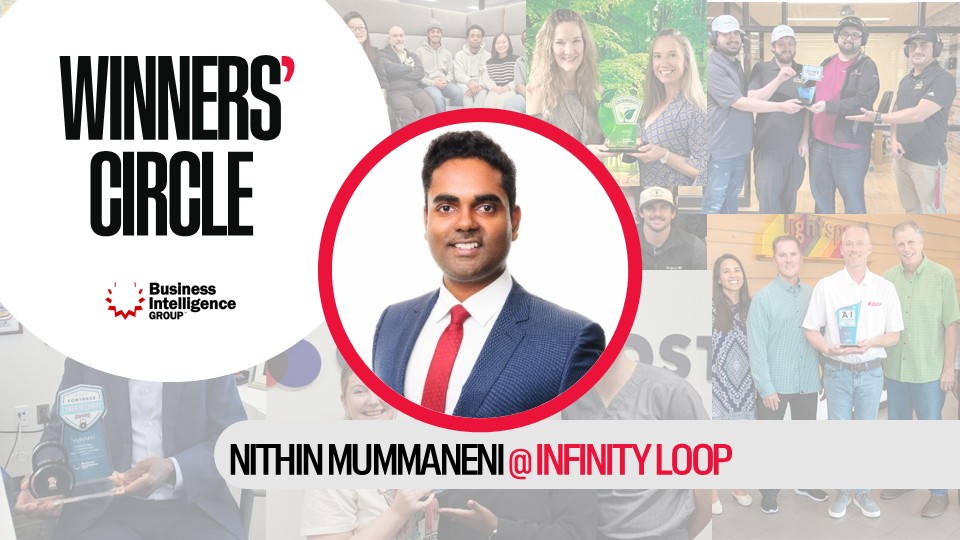

For every enterprise procurement manager, one question haunts every contract negotiation: did I actually get a good deal? The answer has always been frustratingly subjective, buried in market research, competitor intelligence, and institutional knowledge that takes weeks to assemble. Nithin Mummaneni and his team at Infinity Loop have built an AI platform that finally delivers an objective answer, complete with a letter grade, specific savings opportunities, and detailed strategies for improving any deal.
From Management Consulting to Machine Learning
The genesis of Infinity Loop traces back to Mummaneni's experience as a management consultant working for Fortune 500 companies and private equity firms. His job involved identifying top contracts, finding leverage points, renegotiating on behalf of clients, and charging a percentage of the realized savings. The work was effective but painfully manual, requiring teams to analyze deals across industries including CPG, healthcare, manufacturing, cosmetics, and defense.
What struck Mummaneni was how similar the underlying process remained regardless of industry. Companies buying vastly different goods and services all needed the same fundamental intelligence: market benchmarks, deal structure comparisons, and negotiation strategies that actually work. The manual nature of gathering this information meant procurement teams spent 80 to 90 percent of their time on prep work rather than the actual negotiation, which quite frankly happens to be the fun part anyway.
According to Deloitte research on procurement transformation, companies with advanced analytics capabilities in procurement see up to 20 percent cost savings compared to industry peers (https://www2.deloitte.com/us/en/pages/operations/articles/procurement-analytics.html). Infinity Loop set out to democratize that expertise by encoding it into software that any team could access.
A Report Card for Every Contract
The platform works by ingesting all documents associated with a particular deal, whether those are statements of work, amendments, or rate sheets. Users answer context questions about their specific situation and negotiation approach, and the machine learning model then produces what Mummaneni describes as a report card. Every contract receives a proprietary score, perhaps a C plus on a particular deal, along with specific explanations for that grade and actionable steps to improve it.
The scoring considers multiple dimensions beyond just price. Commercial terms matter, but so do legal protections and operational provisions. Mummaneni points to the COVID era disruption in ocean freight as a cautionary example. Container costs that normally ran around $2,000 spiked to $20,000 or more, devastating companies that had not built index linkages or tiered pricing caps into their contracts. The platform analyzes these risk dimensions holistically so teams can protect themselves before problems emerge.
Beyond the grade, Infinity Loop identifies specific savings opportunities in dollar terms and then provides what Mummaneni calls the real value: seven or more specific negotiation strategies with benchmark data showing what other companies have achieved. These are not generic suggestions but detailed leverage points that teams can actually use on calls or in emails.
Middleware Intelligence for Existing Systems
Infinity Loop positions itself as a middleware intelligence layer that integrates with existing procurement technology rather than replacing it. The platform connects with spend management systems on the procure-to-pay side and for contract management. Critically, Infinity Loop does not touch workflows, redlining, or approval orchestration.
This positioning reflects a deliberate strategy. Mummaneni observes that many AI solutions in procurement focus on workflows, which provide efficiency but do not directly impact the bottom line. The question of whether you got a good deal, and how much money is being left on the table, requires different capabilities entirely. By focusing exclusively on negotiation intelligence, Infinity Loop can go deeper on the problem that actually moves margin.
The platform currently handles 23 broad procurement categories and 150 subcategories, with plans to expand coverage across additional industries and use cases. The training data comes from real negotiation outcomes, meaning the models improve as more companies use the platform and feed back their actual results.
Transforming Procurement Capacity
The efficiency gains from automating prep work prove substantial. Individual procurement managers who previously handled five to eight deals per week can now manage 15 or 16 because all they focus on is the actual negotiation itself. The platform eliminates the need to research market benchmarks, analyze comparable deals, and develop strategies from scratch for every contract.
This capacity expansion comes alongside cost avoidance on external consulting. Companies that previously hired McKinsey, Bain, Deloitte, or similar firms to conduct procurement optimization now have the expertise available internally through software. The platform essentially democratizes the methodology that consultants have charged millions of dollars to deliver.
Mummaneni addresses the natural concern that AI might threaten procurement roles by reframing the value proposition entirely. The platform makes internal teams look like superstars rather than replacing them. Instead of appearing at a negotiation with generic preparation, procurement managers arrive with specific benchmark data, detailed strategies, and confidence that they understand their position relative to market. The messaging focuses on upskilling and insourcing rather than automation.
The Trust Question in High Stakes Decisions
Enterprise procurement involves contracts worth millions and sometimes billions of dollars, creating an inherently high trust threshold for any technology that influences decisions. Mummaneni acknowledges directly that AI is not yet ready to conduct negotiations autonomously for deals of this magnitude. The organizational trust simply does not exist for a bot to negotiate a million dollar contract, and he does not expect that to change soon.
The platform therefore focuses on decision intelligence rather than decision making. Humans retain full control over the actual negotiation while receiving dramatically better preparation and ongoing guidance. This approach builds trust incrementally by proving value through proof of concept implementations before broader rollout.
Security architecture reinforces this trust positioning. The platform includes SSO and MFA capabilities, and the backend data architecture ensures that sensitive pricing information from one company never exposes details that could benefit competitors. Enterprise customers conduct thorough information security and IT diligence before implementation, and Infinity Loop has built systems that pass these evaluations.
The adoption challenges that do emerge often involve change management rather than technology concerns. Teams sometimes perceive AI tools as threats to their roles, which requires clear messaging about efficiency and empowerment. Once procurement managers experience the platform making them more effective, adoption resistance typically dissolves.
Enjoying insights from industry leaders? Subscribe to The Winners' Circle podcast on your favorite podcast player and never miss an episode. Listen and subscribe at bintelligence.com/podcast.