







One thing most of us in marketing tend to overlook is language. Not tone or voice or word choice, really. The actual, literal language our customers speak at home.
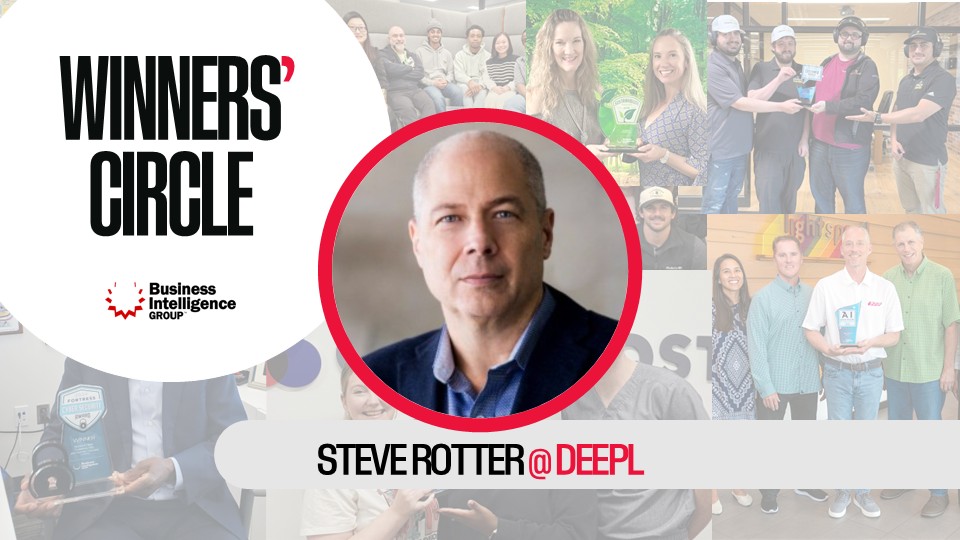
I sat down recently with Steve Rotter, Chief Marketing Officer at DeepL, on The Winners' Circle podcast. Steve is on his fourth CMO role, spanning marketing technology, supply chain tech, and developer tools, and he said something early in our conversation that kind of stopped me cold. Thirty percent of US households don't speak English as their primary language. So if you're a US company marketing only in English, you're actually an international company already, whether you realize it or not.
That stat alone is worth sitting with for a bit.
Why Specialized AI Models Win (And the Data Proves It)
So you've probably experimented with one of the big general-purpose AI tools by now. They're genuinely useful for a lot of things. Writing a poem, summarizing a meeting, pulling research together at midnight. But Steve made a pretty compelling case for why that general-purpose approach doesn't work very well for translation.
DeepL has spent close to seven years building proprietary training data specifically around human language translation across more than a hundred languages. It's a very different kind of foundation than a model trained on a broad swath of internet content, including, as Steve put it, basically the garbage of the internet.
The proof is really in the numbers. DeepL ran over 44,000 blind tests comparing their outputs against tools like ChatGPT and Google Translate, using professional translators as the evaluators. Those translators preferred DeepL's results nearly 90% of the time. That's actually not a marginal difference at all. That's a pretty clear statement about what focused training data can do.
Steve used a retailer analogy that actually landed well. You can go to a big box store and pick up a tennis racket and a fishing rod. Sure, those work fine. But you're not winning Wimbledon with that racket. Sometimes the specialist shop is just the right call.
That is especially true for AI language translation for business situations where getting it wrong has real consequences. Translating a contract incorrectly is a very different kind of problem than getting a vacation menu slightly off.
Three Ways Companies Are Using AI Translation Right Now
Steve broke down the practical side of how businesses are actually using DeepL, and it's more varied than most people tend to think.
The first is the two-box setup, which is pretty much what you'd picture. Text goes in one side, you pick a target language, and out comes the translation. Good for short-form content, quick emails, fast internal communications.
The second is document translation, and this is where things get kind of interesting in ways you might not expect. Say your team publishes a 30-page annual report and needs it in a dozen languages by end of week. With DeepL, it's a drag-and-drop situation. The formatting holds, the page breaks stay where they should, and the images wrap correctly. That matters a lot, Steve pointed out, since certain languages like German tend to run 20 to 30 percent longer than English, so the whole document has to reformat itself on the fly. Languages that read right to left versus left to right add yet another layer of challenge. Steve called it a graphic designer's nightmare, basically handled automatically. He's pretty much right.
The third is the API, which is how companies like Notion are running their localization right now. Their website and apps serve 20 languages in near real time through the DeepL API. No army of human translators required. No three-month lag before the German version goes live. And for an e-commerce company managing over 100,000 product SKUs that wants to expand into a new European market, that near-real-time capability is literally the difference between getting to market and missing it entirely.
How Smart Companies Know When to Bring a Human In
Something I found really practical in talking with Steve was the framework DeepL uses to coach customers on where AI translation works best versus where a human review should happen.
It's basically a layered approach. Some content, like user manuals or low-risk support documentation, you can translate with full confidence and move on. A second category gets AI translation with a quick human spot-check, and DeepL has built tools that actually flag the specific parts the model isn't confident about, so the reviewer knows exactly where to focus. That makes the editing process a lot faster without adding a lot of risk.
Then there's a category where you'd probably want a human specialist doing the work from the start. Short-form ad copy is the example Steve gave. Nine words on a billboard in a language you don't natively speak needs someone who genuinely gets the emotional weight of what those words mean to that audience, not just a translated version of what they mean in English.
Steve shared a story from a press tour with DeepL's CEO in Korea that kind of stuck with me. A journalist opened their meeting not with a hard question about funding or competitors, but with a very simple "I want to thank you." He went on to explain that a story had broken in his market, his colleagues used a free translation tool to cover it, and they got it wrong. He used DeepL and got it right. That distinction changed his career trajectory.
Words matter. The right tools for those words matter just as much.
DeepL Voice and the Real Meaning of Borderless
The part of this conversation that kind of opened things up for me was DeepL Voice. Real-time voice translation across multiple languages, with low enough latency that the actual conversation stays coherent.
Steve described three main use cases. Virtual meetings where everyone hears the conversation in their own language in real time. Face-to-face situations like factory training sessions where workers scan a QR code and hear the trainer through their own earbuds in whatever language they prefer. And API-based call center deployments where inbound calls in any language get handled well without requiring native-speaking staff across every time zone.
The latency challenge there is genuinely real. I spent time in the voice business back when voice and internet first started merging, and delay was something we worked on constantly. The human ear starts noticing audio delay past about half a second, and at that point it starts to break down the whole conversation. Getting AI language translation for business right at real-time speeds is a serious technical problem, and one DeepL is apparently solving in a way that holds up in practice.
Steve's broader framing for all of this is what DeepL calls a borderless business. Language has basically always been a constraint on which markets you enter, which employees you can hire, which customers you can actually serve well. The translation market is an $80 billion market, and a huge chunk of that is still slow, expensive, outsourced human translation work. Compressing that time and cost, and putting those dollars back into actual campaigns and customer outreach, is a very real opportunity for any CMO paying attention right now.
This conversation got me thinking pretty seriously about what that means for the Business Intelligence Group. We run the Best Places to Work awards program and get asked for Spanish survey options regularly. The second we start looking at other markets, that language list gets very long very fast. It's a pretty obvious next step. If you haven't tried DeepL, they have a free translator at deepl.com/translator that's worth a few minutes of your time.