







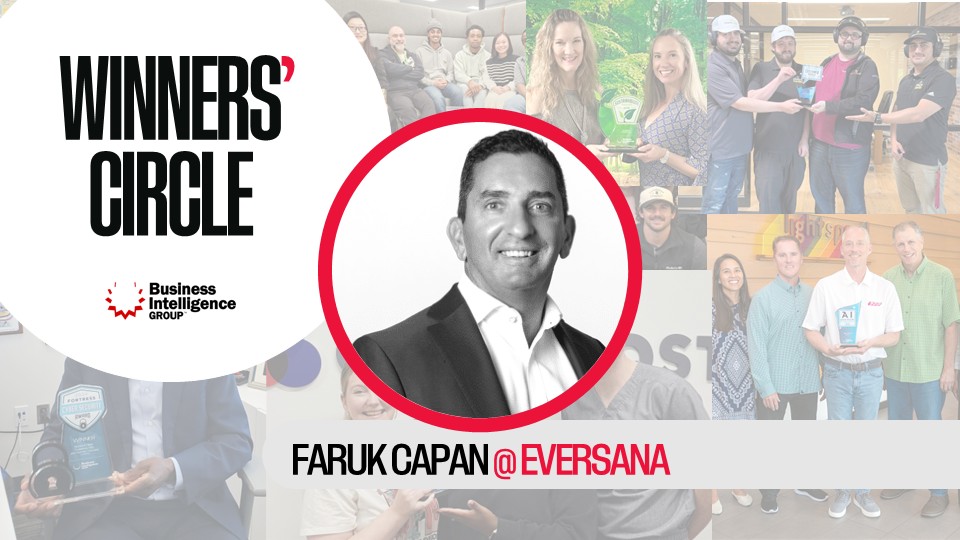

Pharmaceutical marketing operates under constraints that most industries never face. Every claim must be compliant, every message FDA approved, every patient communication carefully vetted. The result has historically been campaigns that take four to six months from concept to market, with 50 to 60 people touching each project across medical, regulatory, creative, and technical teams. Faruk Capan, Chief Innovation Officer at EVERSANA, decided that AI could fundamentally change this equation, but only if the company was willing to completely rethink its business model rather than simply adding productivity tools to existing workflows.
The Compliance Challenge That Shapes Everything
Capan brings more than 30 years of pharmaceutical advertising and marketing experience to his role, having witnessed the arrival of the internet, social media, and mobile. He considers AI the most accelerated transformation he has ever seen, but also one that requires careful navigation in healthcare. The first rule of pharmaceutical marketing mirrors the first rule of medicine itself: do no harm.
His early career experience illustrates the tension perfectly. At his first pharma company job, Capan built a patient portal and collected questions that needed doctor responses before publication. The process took three to four months, leading him to tell management that patients might die before answers reached them. He started bypassing the process to publish faster and nearly got fired. The compliance requirements exist for good reasons, but they create friction that compounds across every project.
According to Deloitte research on pharmaceutical commercialization, compliance review and approval processes account for 30 to 40 percent of total campaign development time in most organizations (https://www2.deloitte.com/us/en/pages/life-sciences-and-health-care/articles/pharmaceutical-product-commercialization.html). EVERSANA set out to dramatically compress this timeline without compromising the regulatory safeguards that protect patients.
The Startup Within the Enterprise
Rather than attempting to transform a 5,000 person organization incrementally, EVERSANA took a different approach. Capan put together a dedicated team and told them to rethink everything from scratch. Not productivity gains on existing workflows, but entirely new models, new processes, new ways of working. The team operated in startup mode with full accountability, including responsibility for selling the platform and converting customers.
The results after just eight or nine months have been remarkable. The team has engaged with 165 potential clients and already has 10 to 15 either piloting or actively working with the platform. The constraint now is not demand but capacity to properly onboard and transform existing client relationships. The shift requires coordination and training, not just flipping a switch.
The model targets 80 percent AI execution with 20 percent human expertise for high value decisions. Those humans are specialists in medical, regulatory, creative, and strategic domains who guide the AI rather than performing routine tasks. Where projects previously required 50 to 60 people across multiple vendors and geographies, the new model operates with 5 to 10 highly skilled humans touching each engagement.
Building Compliance Into the Foundation
EVERSANA partnered with Google to build the platform, a decision driven by enterprise requirements around scale, security, and compliance. Large pharmaceutical clients need guarantees that startup companies cannot provide on their own. Google brings what Capan calls the brain while EVERSANA provides the pharmaceutical domain expertise.
The partnership extends to security architecture. Google engineers worked alongside EVERSANA from day one to ensure the platform meets pharmaceutical data protection requirements. The system handles patient data and physician information, meaning any breach or incorrect message could create significant liability. Multi-tenant architecture keeps each client's data completely separate, and crucially, the platform does not train on client data to improve the overall model. Each client's information remains confined to their own environment.
Compliance checking happens throughout the process rather than at the end. Traditional pharma marketing follows a linear path where creative work proceeds through multiple stages before reaching regulatory review, often triggering rounds of revisions. The EVERSANA platform embeds compliance agents that check claims and data at every step, so when work reaches the formal approval stage it passes through smoothly.
From Months to Weeks
The speed improvements are genuinely dramatic. Capan notes that the platform can now complete entire projects in a single month, though he does not promise that timeline to every client because they need time to adjust to the new pace. The 80 percent AI target translates to at least double or triple the speed of traditional approaches, with 30 percent cost savings from the outset.
Perhaps more significantly, the platform enables personalization that pharma compliance has historically prevented. Traditional campaigns might produce three email templates because creating more exceeded available time and budget. With AI handling execution, clients can now produce 50 or 100 variations, enabling true one to one communication with physicians based on their specific interests and questions. Personalization in pharma has lagged other industries by decades due to compliance constraints, and EVERSANA sees this as an opportunity to finally catch up.
The feedback loop also accelerates dramatically. Traditional campaigns wait months to determine effectiveness. The new platform can assess performance in days or hours, enabling rapid iteration that was never previously possible in this highly regulated environment.
AI Doctors and the Human Touch
EVERSANA has explored AI generated video featuring key opinion leaders, the expert physicians who typically travel to conferences and video shoots to provide educational content. Initial skepticism suggested that no one would trust or watch AI generated doctors. But when the company asked actual key opinion leaders whether they would participate, 89 to 90 percent enthusiastically agreed. The appeal of eliminating travel while maintaining control over their digital likeness proved compelling.
Patient research showed similar receptivity. As long as the content is genuinely helpful and detailed, patients express willingness to engage with AI generated medical information. The quality of AI video has improved so dramatically in the past year that believability is no longer the primary concern.
Capan still believes in the importance of human touch for certain interactions. But he points to obvious opportunities where AI delivers immediate value, like answering insurance eligibility questions in seconds rather than forcing patients to wait on hold for 10 minutes. The goal is not replacing human connection but eliminating friction that serves no one.
Lessons for Innovation Leaders
Several principles emerge from EVERSANA's experience that apply beyond pharmaceutical marketing. First, leadership must genuinely commit to transformation, accepting that revenue might decline in the short term as business models shift. Capan acknowledges his company may need fewer people going forward but frames this as an opportunity to grow through new business rather than simply cutting costs.
Second, treating innovation as a real business with profit and loss accountability changes the dynamic entirely. The innovation team cannot simply throw darts at a board hoping something sticks. Every initiative requires a business case, investment analysis, and path to profitability.
Third, the word pilot can be dangerous for innovation because it inherently limits scope and ambition. Pilots rarely progress to full implementation because they are designed as restricted tests rather than new ways of working.
Finally, speed becomes the only real competitive advantage in AI. Anyone can catch up with a good idea within months. Execution, customer acquisition, and continuous improvement determine who wins, not being first with an interesting concept.
Enjoying insights from industry leaders? Subscribe to The Winners' Circle podcast on your favorite podcast player and never miss an episode. Listen and subscribe at bintelligence.com/podcast.