







Ok, so here is a question that sounds simple and really is not. Why do most of us have a drawer somewhere with two or three dead phones in it? We know they are worth money. We usually say we care about the environment. Yet there they sit, quietly losing value, more or less forever.
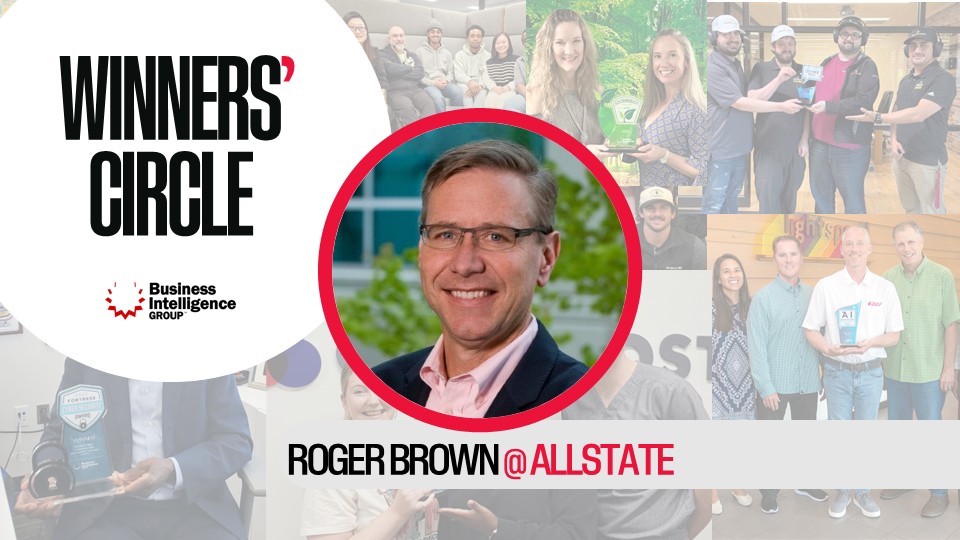
Roger Brown, Managing Director of Mobile for North America at Allstate Protection Plans, has been chewing on that puzzle for a long time. He spent two decades at T-Mobile running device portfolios, financing, upgrades and supply chain, so he has watched consumers not trade in their phones at basically every scale you can watch it. Now his team just won a 2026 Sustainability Award for an electronics trade-in program with Staples Canada that finally cracked a piece of it. The trick, honestly, was not a better recycling bin. It was a payment sequence.
The Gap Nobody Talks About
The numbers here are a little wild. Roger says that when you survey people, something like sixty to seventy percent say they want to do the right thing with an old device. Then reality shows up. "Only about one out of five phones finds its way into a reuse program," he told me. That gap is not a technology problem, since the refurbishment capacity mostly exists already.
It is a behavior problem, and Roger buckets it into three pieces. Ease and convenience, first, since people are busy and friction wins. Trust, second, since that phone holds your photos and your banking app and you are handing it to a stranger. Incentive, third, and that one has gotten a lot better lately. US consumers pulled in more than $6.4 billion through mobile trade-in programs in 2025, which was a 42 percent jump year over year, so the money is definitely there.
What is not there, apparently, is the drawer opening. Globally we produced 62 million tonnes of e-waste in a single recent year and formally recycled just 22.3 percent of it, per the UN Global E-waste Monitor, leaving roughly $62 billion of recoverable material unaccounted for. That is real money sitting in real junk drawers.
Flipping the Risk
Here is the part that makes this an award winner. The classic trade-in flow goes like this: you get a quote for $400, they mail you a kit, you mail the phone back, they inspect it, and eventually you get paid. Perfectly rational. Pretty forgettable too, since by day four you have moved on with your life.
Staples pushed Allstate to try the reverse. Now a customer can get a quote online or in a store, accept it, hand over a credit card for a short-term hold, and receive a Staples e-gift card for the full amount right then. They have seven days to drop the device at a store or mail it back with a prepaid label. The hold releases when the phone lands.
"We're not actually charging the card," Roger said. "But it gives us the confidence that if the phone never comes back, there is a recourse." Which means the company absorbed the timing risk that customers used to carry. As someone who spent years selling B2B telecom online, I can tell you that five minutes is roughly the shelf life of buyer intent. This model closes inside that window.
The Surprise That Changed the Design
Allstate launched the instant version first, figuring everyone would love it. They were wrong, sort of. Surveys came back close to a clean fifty-fifty split between customers who wanted instant payment and customers who would rather just mail the phone in and wait for the money.
"That was the big insight," Roger said. "It's not one or the other, which has been a debate that I've sat in various rooms over my twenty year career with everybody." So they built both and let people choose. That fifty percent who prefer waiting, by the way, is the trust issue showing up again, just wearing a different costume this time.
Choice is the real product here. Circana found about 11 percent of US consumers now own a pre-owned smartphone, and roughly 75 percent of new-phone buyers say they would consider a certified pre-owned device next time. The demand side is warming up nicely. The supply side just needs people to let go of the old handset.
The Metric That Actually Matters
Ask most companies how a sustainability initiative is performing and you get a tonnage number for the annual report. Roger looks at something sharper. His team and Staples track trade-in volume as a proportion of new equipment sales, so if Staples sells a hundred phones, how many of those hundred had a trade-in attached?
That single number aligns everybody. It rewards the associate for asking, it rewards Staples with margin, and it pulls devices back into circulation without anyone needing to feel virtuous about it. "You just need to get the ask out there," Roger said. "And then a lot of times consumers are like, that sounds awesome."
The economics do the rest. Nobody pays $300 for a previously loved phone with a plan to scrap it, since that is a money-losing proposition on its face. Reuse is the only profitable exit, which is a much sturdier guarantee than a pledge in a sustainability report.
Regulation as a Tailwind, Not a Headache
Europe has been busy. As of June 2025, new EU ecodesign rules require phone makers to supply key spare parts for at least seven years after a model leaves the market, deliver operating system updates for five years, and print a repairability grade from A to E right on the label.
Roger reads that as pure upside. "I see 100 percent as a tailwind," he said. He pushed back, too, on a lazy assumption baked into most life-extension talk, which is the idea that extending a device's life means you personally must keep your phone longer. Nope. "If Russ wants a new phone after one year, Russ should go get a new phone after one year," he said. "We will create the second life and extend the life of that device with somebody else." Maybe a third life. Maybe a fourth. Kind of like a three-year-old car with ninety-nine percent of its useful life still in it.
For anyone building an electronics trade-in program inside a retail business, that reframe matters. You are not asking customers to consume less. You are asking them to hand off value instead of burying it.
What Marketers Should Steal From This
There is a clean lesson in here for anyone running a program with a sustainability story attached. Allstate did not lead with guilt. They led with four hundred dollars in your hand today, and the environmental outcome came along for the ride.
Semantic coherence between what you promise and what the customer experiences is the whole ballgame. Say fast, be fast. Say easy, remove the kit and the waiting and the second trip. Then build the incentive so your frontline associates want to bring it up, since a program nobody mentions in the store is really just a press release.
The Business Intelligence Group judges saw the same thing our audience will hear in this episode. This is a circular economy play dressed up as a customer convenience play, and that disguise is exactly why it works. Congratulations again to Roger and the entire team at Allstate Protection Plans on the 2026 Sustainability Award.
Want more conversations with the people building this stuff? Subscribe to the Winners' Circle Podcast at bintelligence.com/podcast.