





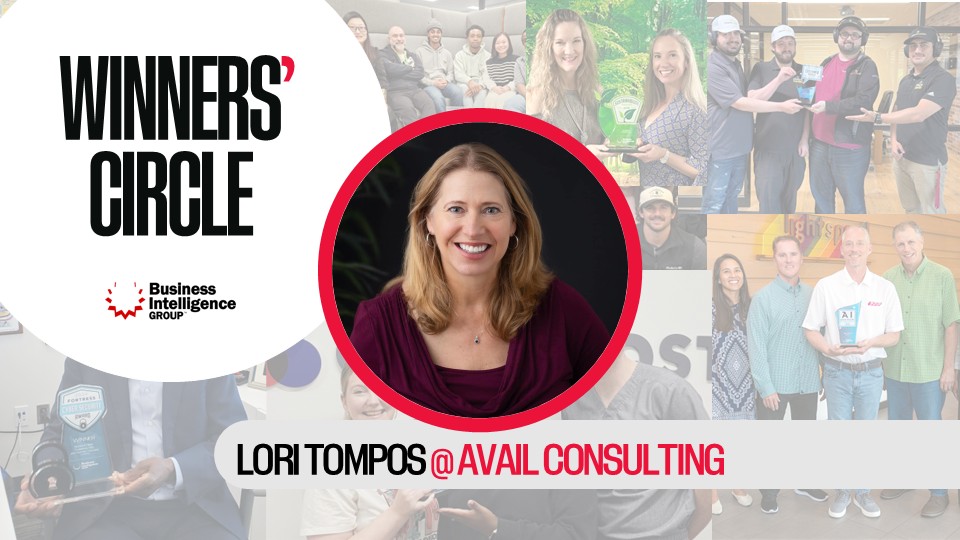

In a corporate landscape often defined by rigid hierarchies and transactional relationships, Lori Tompos is a breath of fresh air—and a force to be reckoned with.
As one of the inaugural Herizon Award winners, she was recognized for her extraordinary ability to transform people. A West Point graduate and a combat veteran of Desert Storm, Tompos has transitioned from the high-stakes environment of the battlefield to the strategic arenas of higher education and corporate boardrooms with her company Avail Consulting. Her mission is singular and powerful: to transform individuals into better leaders and more effective communicators.
From the Desert to the Boardroom: A Pioneer’s Journey
Lori Tompos did not set out to be a pioneer; it happened "accidentally" through a relentless pursuit of her purpose. Her leadership foundation was forged at West Point, where discipline, responsibility, and accountability are not just buzzwords but survival skills.
The Patriot Missile Realization
During her time in Germany leading up to Desert Storm, Tompos found herself as one of the last lieutenants in the door. Rather than waiting for instructions, she took the initiative to master the Patriot missile system, a brand-new technology at the time that required secret clearance.
"I was like, okay, what can I do? I can get prepared. I can learn the Patriot missile system really, really well... Let it not be said that I don't know what I'm doing".
When war broke out, Tompos was the only one pulled from Germany to meet up with 11 infantrymen in the desert. Facing a group of men who likely weren't expecting a female leader, she didn't rely on "sitting on them" or micromanaging. Instead, she relied on competence and collaborative expertise. She handled the Patriot system; they handled the perimeter. This early experience solidified her belief that leadership is about trust and letting experts own their roles.
The Core Philosophy: Lead People, Manage Projects
The most striking takeaway from Lori’s consulting work and her TEDx speech is her fundamental mantra: "Lead people, manage projects. Only. People are to be led".
The Death of Traditional Management
Tompos argues that the way we currently think about managing people is "dead wrong". In her view, management is for tasks, timelines, and budgets. People, however, require leadership—a distinction that many corporate entities fail to make.
She identifies three pillars for this new kind of leadership:
- Competency: Knowing your stuff and being a continuous learner.
- Confidence: Believing in the mission and your ability to guide others.
- Compassion: Leading with care, concern, and support.
The Anti-Micromanagement Stance
Micromanagement is a "universal truth" regarding what people hate. Tompos believes it stems from a fear of delegation and a lack of trust. When a leader micromanages, they transmit a clear message: I don’t trust you, and I don’t believe in you.
Instead, Tompos advocates for a model where leaders provide the "what" and the "why," but let the team discover the "how".
The Crisis in Corporate Leadership
Transitioning from the military to corporate America, Tompos was shocked by the lack of actual leadership training. While bookstores are filled with leadership titles, real-world application is often sparse.
The "Revolving Door" of Talent
When speaking with HR professionals, Lori Tompos often asks what keeps them up at night. The answer is almost always the same: stopping the revolving door of talent.
The statistics support her observations:
- The 87% Rule: 87% of the time, people leave a job because of the manager, not the job itself.
- The Cost of Failure: Massive cutting of people is not a strategy; it costs significant money to hire and train new people compared to treating existing talent well.
- The Recognition Gap: In many businesses, recognition is heavily weighted toward products (45%) and companies, while people and teams are the least recognized categories.
Leading in the Age of AI and Change
As we move through 2026, the rise of AI has created significant "angst and anxiety" in the workforce. Tompos suggests that the antidote to this anxiety—which often comes from a lack of control—is to focus on what you can control.
Doubling Down on "High Human Skills"
As AI takes over technical and menu-driven tasks, the value of human-centric skills skyrockets. Tompos urges leaders and employees to focus on:
- Empathy and Compassion: Building connections that machines cannot replicate.
- Critical Thinking and Analytical Problem Solving: Navigating complex issues beyond standard protocols.
- Strategic Thinking: Planning for the future with a growth mindset.
Psychological Safety: The Foundation of Growth
For a team to thrive, they must feel seen, respected, and heard. This is the essence of psychological safety—the belief that one can speak up, share ideas, or admit a lack of knowledge without fear of retribution.
The Danger of the "Barking" Leader
Many leaders claim to have an "open door policy," but their actions tell a different story. If a leader "barks" at an employee when they actually use that door, the door is effectively closed.
Tompos shares that breakdown often isn't a lack of will, but a lack of how. If an employee doesn't feel safe admitting they don't know how to do something, they will stall or scramble, leading to project failure.
Empowering the Next Generation
Despite the hurdles, Lori is incredibly optimistic about the future. In her work teaching and interviewing young leaders, she sees a generation that refuses to tolerate toxic management.
"They won't tolerate that like previous generations did... they see immediately the stuff that's not right".
Her advice for those starting out or evolving their careers in 2026 is simple yet profound:
- Focus on Skills: Identify what you need to know for the future workforce.
- Lean into Strengths: Find where you best fit based on your unique skill sets.
- Help Others: Once you find your path, help others get there too.
Final Thoughts from the Winner’s Circle
Lori Tompos’s journey from a Patriot missile battery to the executive boardroom is a testament to the power of purpose-driven leadership. By shifting the mindset from "managing" people to "leading" them with compassion and competence, organizations can stop the revolving door of talent and create environments where people truly bring their best.
As she reminds us, echoing Nelson Mandela, "I either win or I learn". In the pursuit of better leadership, every challenge is merely a pivot toward a more effective way of being.