







OK, so something pretty wild is happening in 2026: the slowest-moving sectors are now setting the pace on AI. Banks, hospitals, law firms, and the world's biggest consulting agencies are basically the institutions you usually expect to drag their feet on new tech. And yet, the latest round of We Love Tech Awards judging tells a different story. The winners this year are honestly arriving from healthcare, financial services, government, energy, and life sciences, which sort of flips the old playbook on its head.
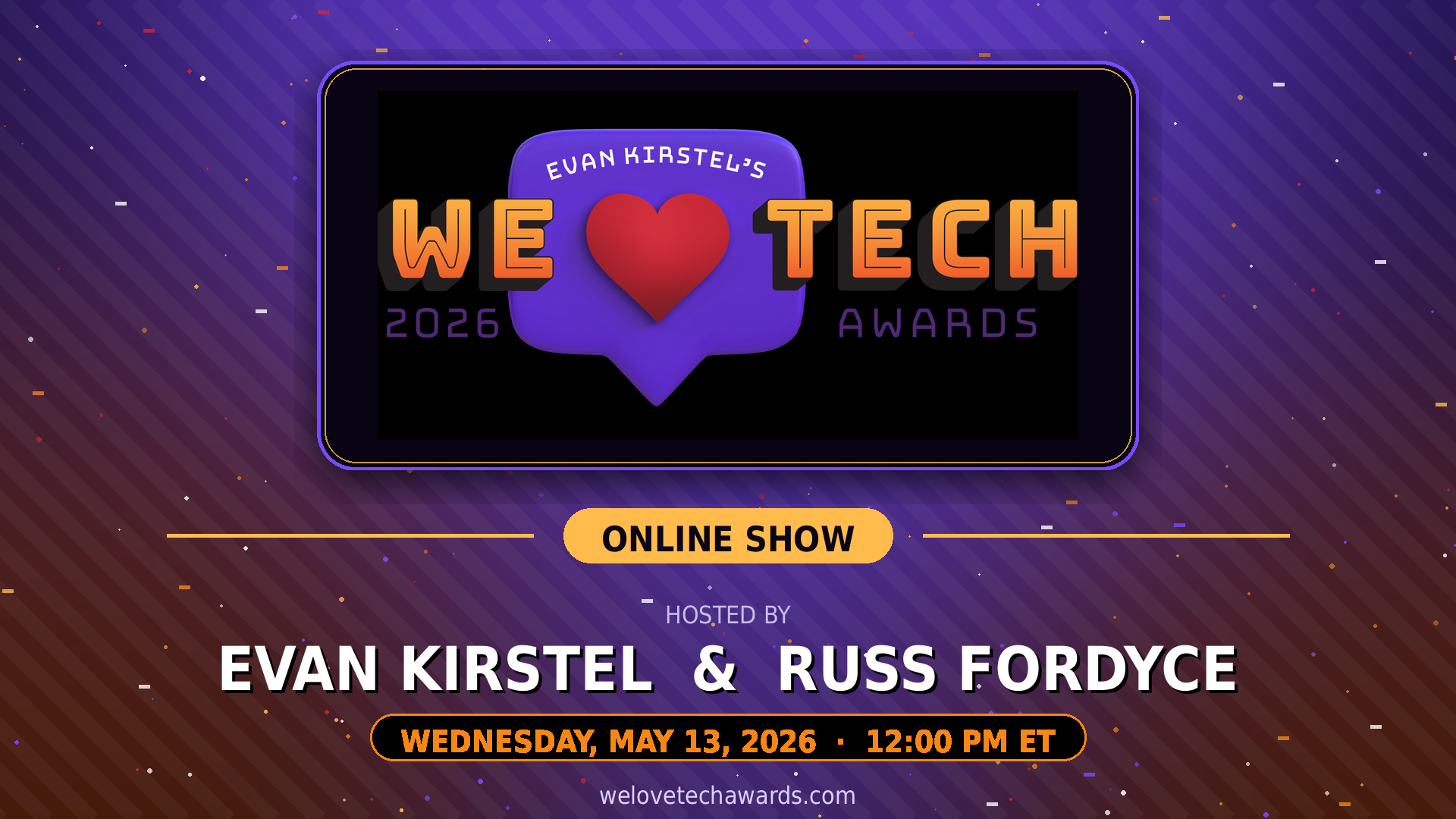
The honors come out of We Love Tech Awards, a program co-hosted with Evan Kirstel, the tech fluencer whose name shows up in just about every B2B AI conversation these days. Kirstel and the Business Intelligence Group team review hundreds of nominations each year, and the second annual program drew a record showing of over 400 volunteer judges, dozens of regulated-industry winners, and a few moments where the math itself was honestly eye-popping.
Three Categories, One Common Thread
OK so the program runs three categories: individual contributors, organizations, and products. The thread connecting them is basically real, measurable impact. Saira and Clearcom showed up in customer experience, validating chatbots and replacing legacy IVRs with what Kirstel called "intelligent digital humans." Optury earned a product nod in cybersecurity, basically using AI to fight AI-generated threats. Ravenstar pulled in a win for massive MIMO radio architecture, which honestly 10x's wireless capacity over older designs. None of these are flashy consumer gadgets, you know. They are sort of invisible infrastructure plays, which kind of makes them no less important.
The individual category, of course, went to Mary Elizabeth Poiret, global vice chair of client technology at Ernst & Young. Poiret has been responsible for building EY's GenAI platform, and the numbers are honestly kind of absurd: roughly 10,000 agents deployed for clients, three nines of availability, and over 100 million prompts processed. That level of operational rigor used to be the stuff of Six Sigma case studies, frankly, and seeing it land inside a consulting agency feels just a little surreal.
The Year Regulation Met Real ROI
Here's the thing that really surprised me this cycle: roughly 76% of this year's nominations landed in the AI, agentic, or machine-learning bucket. Naturally, that's not shocking on its own. What's actually shocking is where those nominations came from. Highly regulated sectors usually trail consumer markets by a few years, sometimes longer, yet this year they pretty much dominated the shortlist. Per a recent McKinsey State of AI survey, financial services and pharmaceuticals are now reporting some of the highest GenAI adoption rates of any industry, which seems to track perfectly with what our judges saw.
The win for A1QA in the organization category sort of crystallizes the theme. They are an AI-powered quality assurance firm with over a thousand quality engineers, working across telecom, healthcare, gaming, and a few other sectors. Their pitch is straightforward: humans in the loop, AI in the test rig, and accountability that regulators can audit. Trust, frankly, became the defining competency of this awards cycle, and A1QA's model basically anticipates where most enterprises are headed.
From Solo Operators to Global Vice Chairs
What I really love about this program is the range it pulls in. Daily Pay grabbed a win for redefining how workers actually get paid every day. Lawmatics, sort of meanwhile, took an organization award for vertical SaaS in legal, helping solopreneur attorneys run their practices on AI that is trained on legal context, not generic chat completions. Protect Star earned recognition for mobile app security, which is often an under-defended endpoint, especially for small businesses. Each of these companies is basically attacking a different scale of problem, yet they are all chasing the same outcome: real ROI inside a real workflow.
The product category, of course, went again to EY for EYQ, the internal GenAI ecosystem Pablo Sabaro and team built in just four weeks. Four weeks. For 300,000 employees. With 80% internal adoption and roughly 50,000 agents in development. That's the kind of velocity people used to associate with startups, you know, not the world's largest consulting firms. The Business Intelligence Group's crowd-sourced judging panel of over 400 practitioners from places like Amazon, Google, AWS, Adobe, and Visa kept landing on this same theme: enterprise AI innovation now lives or dies on speed to value, semantic coherence, and entity-based authority inside regulated workflows.
What "Token Maxing" Reveals About the Next Year
Kirstel and I joked a bit on the show about a new metric we are calling "token maxing," which is basically the volume of tokens processed across an organization in a given period. It started as a punchline, honestly, but the more we talked, the more it felt like a real proxy for AI maturity. Gartner forecasts worldwide GenAI spending will hit roughly $644 billion in 2025, with a substantial chunk flowing into the enterprise stack, which sort of explains why EY's 100-million-prompt number is not an outlier anymore. As Kirstel put it on the show, "measurable impact, real ROI, that's been a big question over the industry on the consumer side. But from a B2B standpoint, you really have to demonstrate and prove the value." That comment, frankly, captures the whole year.
Why Trust Became the Defining AI Competency
Look, anyone can ship a chatbot. Shipping a chatbot a regulator will sign off on is sort of another matter. The We Love Tech Awards this year, kind of, reward operators who built AI for environments where data governance, identity protection, and auditability are basically non-negotiable. According to IDC's FutureScape AI guidance, governance maturity is now a top predictor of which enterprise AI projects actually make it into production. Our winners, you know, line up almost perfectly with that finding. They are operators, not hype merchants. And that, basically, is what enterprise AI innovation looks like today: less theater, more throughput.
The slowest-moving industries usually have the best war stories once they finally pick up speed. This year's We Love Tech Awards class is, in fact, that war story. Congratulations to every nominee, every winner, and every judge who put in those unpaid hours to score it all. The third annual program is sort of already around the corner, and based on what we just saw, 2027 is going to be a really fun one to watch.
Enjoying insights from industry leaders? Subscribe to The Winners' Circle podcast on your favorite podcast player and never miss an episode. Listen and subscribe at bintelligence.com/podcast.