







So here’s a scenario that would make most support leaders break into a cold sweat. You’ve just joined a 32-year old global cloud infrastructure provider company that serves customers in over 100 countries. You’re one week in. The team is technically skilled but was showing some operational inconsistencies. And by the way, the company is literally in the middle of moving from one of its data centers—a time-consuming, detail-oriented full migration. You basically step into a controlled explosion and somehow have to keep everything from going sideways.
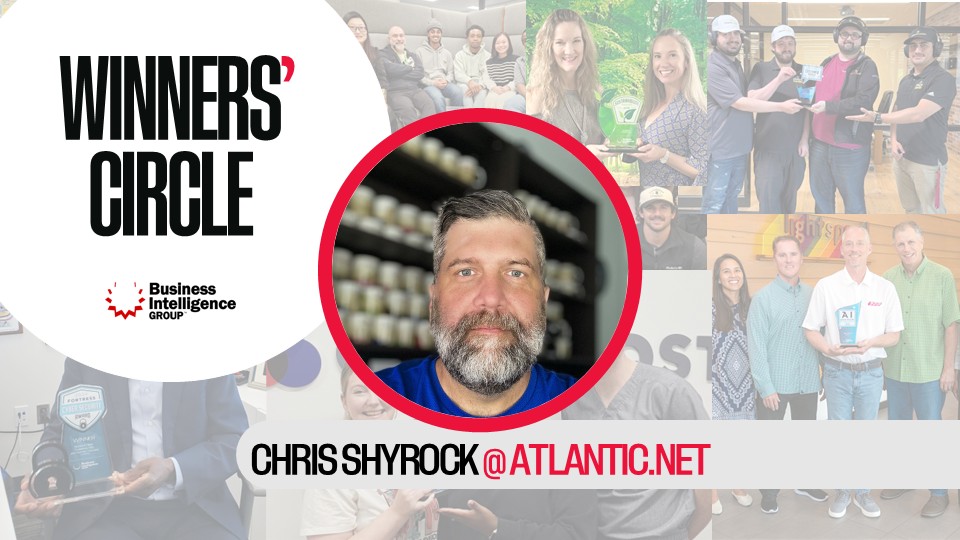
That’s the situation Chris Shyrock walked into at Atlantic.Net. He joined as Director of Support Services a little over a year and a half ago and got to work. Not with a big reorganization or a new ticketing system or a consulting firm. He got to work the old-fashioned way—by sitting with the team, reading the emails, listening to the calls, and figuring out where processes were creating friction and which processes needed further improvements.
The result? A stronger, more refined customer service operation that just earned Atlantic.Net the 2026 Excellence in Customer Service Award for Transformation of the Year from Business Intelligence Group. And a Trustpilot score that went from 3.7 to approaching 4.3 on fully organic reviews. And, maybe most impressively, a completed data center migration with zero customer-impact events reported. Not just low impact. Zero.
The Starting Point Was People, Not Platforms
Shyrock is pretty clear about where he looks first in any support organization. It’s not the tools. It’s not the ticketing system. It’s the people and the process, basically in that order. When he arrived at Atlantic.Net, the technical skills on the team were actually solid. What needed work was everything around how those skills were being applied to customer interactions.
The calls were inconsistent. The emails went back and forth too many times before anyone picked up a phone. The shift handoffs were creating gaps—a customer who called at 2am might be starting from scratch with whoever picked up at 6am because the incoming team didn’t have the context. And the escalation paths, as Shyrock put it, were designed more for the team’s convenience than the customer’s outcome.
One of the first things he did was re-onboard the entire support team. Not just new hires. Everyone. He built a module called "owning the call" and walked the team through scenarios, had them practice, and showed them what good looked like. It sounds almost too simple, but the results were very real. Technicians who were great at solving problems started getting better at communicating what they were doing and why.
The other thing he focused on was getting the right people into the right shifts. In a 24/7 environment like data center hosting—which he compared, pretty accurately, to a hospital—not everyone is wired to thrive on the third shift. It takes a certain mindset. Once he started matching people to the shifts that fit them, the handoffs got smoother almost organically. "Get the right people in the right seat at the right time," as he put it, and a lot of other things start to fix themselves.
Queue Ownership and Daily Governance: Simple by Design
One of the structural changes Shyrock made was implementing what he calls queue ownership with daily governance. It sounds a bit corporate, but the actual mechanics are pretty refreshingly simple. Shift leads are now responsible for managing intake as it comes in, organizing by priority and timing, and making sure there’s a backup plan in place if someone is out sick or on vacation. Every shift has clear accountability for what’s sitting in the queue and who’s best suited to handle it.
The basic formula, according to Shyrock, is just sticking to fundamentals. You organize the work. You assign it thoughtfully. You keep customers moving. And you don’t let anything fall through the cracks between shifts. It turned out that a lot of the inconsistency in the previous model came not from lack of effort but from lack of structure around handoffs and accountability.
According to a Forrester Research report on customer experience, companies that invest in consistent service delivery frameworks see measurably higher customer retention than those that rely on individual heroics. Atlantic.Net’s results seem to line up with that finding pretty well.
The Data Center Migration: A Real Test of Everything
The real proof of how far the team had come showed up during the data center migration. Moving a 32-year-old cloud infrastructure company’s entire physical operations to a new and much denser facility, while keeping existing customers running and continuing to do normal business, is genuinely one of the harder things a support organization can be asked to do. The margin for error is basically zero because some of those customers have been with Atlantic.Net for decades and are running systems where any downtime matters.
What made it work, Shyrock explained, was a combination of intense cross-departmental coordination and the discipline to always have someone listening and observing. Every time a change was about to happen, the support team was briefed and ready to watch for anomalies in the regular ticket flow at the same time. They kept normal business running on top of the migration work, which is a lot to ask of the team operating around the clock.
It was, in Shyrock’s words, probably the year he slept the least. But also the most rewarding year. The team stepped into their strengths in a way that likely wouldn’t have happened without the pressure of a real operational crucible. Atlantic.Net completed the migration with zero customer-impact events. That’s a number that tends to speak for itself in infrastructure circles.
How Trustpilot Became a Team Sport
One of the more interesting moves Shyrock made was turning Trustpilot into something the team actually cared about, rather than a score that just sat in a report somewhere. He started sharing every positive review with the whole organization—not just the support team. Good feedback became public recognition. The team started to see the direct connection between what they did on a shift and how customers talked about the company publicly.
There’s also a bit of friendly competition now around who can drive the most five-star reviews. It turns out people who are naturally motivated by solving hard problems are also, pretty often, motivated by visible recognition that they’ve done something well. Building that feedback loop into daily operations gave the team a concrete, real-time signal that their work was landing.
The Trustpilot score moved from around 3.7 when Shyrock arrived to approaching 4.3 now—all organic, no incentivized reviews. For context, Gartner research on online review platforms consistently shows that meaningful movement in aggregate review scores typically takes years and reflects systematic changes in delivery quality rather than any single intervention. Moving more than half a point in under two years, without gaming the system, is the kind of outcome that tends to get the attention of awards judges.
What’s Next: AI Infrastructure and the Same Framework
Atlantic.Net is actively expanding into GPU cloud hosting through its NVIDIA Partner Network partnership, including H100 NVL and L40S GPU deployments for AI workloads. For Shyrock’s team, that means upskilling on new hardware and software support methodologies while keeping the same foundational approach. The framework doesn’t change just because the technology does. You still have to understand the customer’s goal, communicate clearly, own the problem, and deliver the outcome. The technical layer just gets more sophisticated.
His advice for any support leader looking at a technically strong but experientially inconsistent team? Get into the weeds. Read the emails. Listen to the calls. Understand your individual team members’ strengths and build around those. And create a culture where people feel like it’s actually okay to try something, see what happens, and change course if it doesn’t work.
The hardest thing to change in most long-tenured support organizations isn’t a process or a system. It’s getting people to believe they’re allowed to change things. Once that permission is real and visible, the rest tends to follow. The results at Atlantic.Net are a pretty solid case study in what happens when it does.
Enjoying insights from industry leaders? Subscribe to The Winners’ Circle podcast on your favorite podcast player and never miss an episode. Listen and subscribe at bintelligence.com/podcast.