





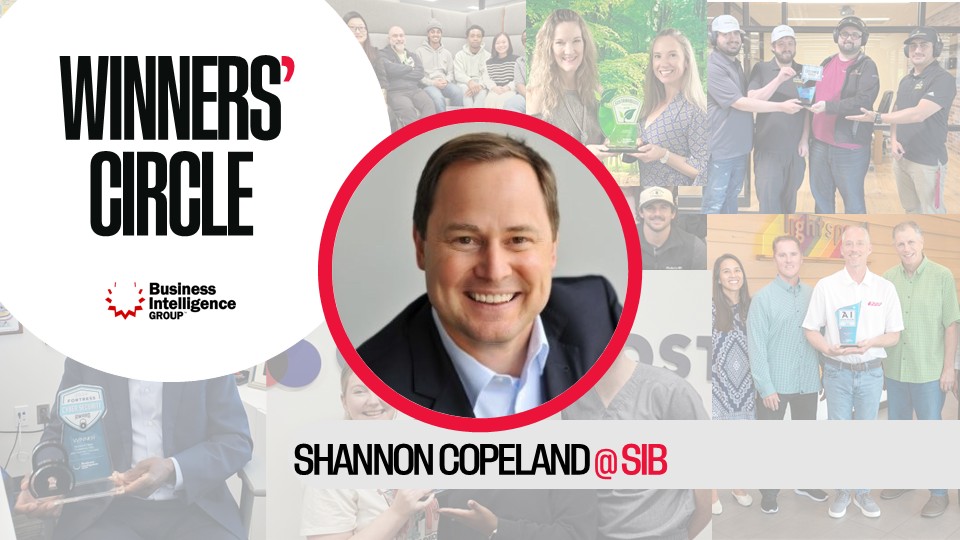

When was the last time your organization did a complete audit of every contract and invoice across the entire company?
If you are like most businesses, the answer is measured in years, not months. One CFO recently told Shannon Copeland, CEO of SIB, that her company had not done a top-to-bottom audit in over 15 years.
That is not unusual. Research consistently shows that companies rarely examine every line item, every contract term, every invoice detail across their entire operation. The data is too scattered, the systems too disconnected, and the expertise too specialized.
SIB has spent 35 years solving this problem through human expertise, with procurement specialists who negotiate 20 to 50 deals a day across 70 different spend categories. Now they have built SpendBrain, an AI platform that does something counterintuitive in the age of large language models: it keeps your data completely private by building a semantic ontology that belongs entirely to you.
The Death of the Benchmarking Database
The procurement industry has historically bragged about benchmarking databases, built by harvesting pricing data from client engagements. Those days are over.
"Clients do not want you to harvest their pricing data, even if it's anonymized and aggregated," Copeland explained. "AI has made clients keenly aware that data is extremely valuable and that it is private to them."
This awareness has fundamentally changed what clients expect from procurement partners. They want the benefits of AI without surrendering their competitive intelligence to anyone.
SpendBrain's answer is unexpected: it is not LLM-based.
"We use LLMs, but they are no better than the backup singer in the band," Copeland said. "The lead singer is an ontology."
For each client, SIB builds a private semantic ontology, essentially a custom brain that understands their specific business, their terminology, their vendors, and their purchasing patterns. The LLM only vectorizes queries. The actual intelligence lives in the ontology, which the client owns and can take with them if they ever leave.
Name Your Own Brain
The personalization runs deep. Clients literally name their own AI brain. One client chose "Orange" because that is what they wanted to call it.
Within 30 days, clients can begin conversing with their brain verbally, even in multiple languages. Within four to six months, they can start teaching the brain, correcting it, adding context, and shaping how it understands their business.
"Because we're not LLM-based, it's non-hallucinatory," Copeland emphasized. "And you can contractually commit to wall off their brain even from us. We do not learn from them as well."
This architecture directly addresses what IBM's 2025 AI Adoption Report identifies as the number one barrier to enterprise AI adoption: data accuracy and the fear of data leakage.
The 40 Percent Problem
Copeland shared a statistic that should concern every CFO: approximately 40 percent of all invoices across all categories have some type of error.
"It doesn't necessarily mean that 40 percent of invoices have a cost reduction opportunity or an error where they're being overbilled or underbilled, but there's some type of error," he clarified.
The traditional approach to catching these errors relies on occasional audits and manual review, processes that cannot scale and typically happen years apart. SpendBrain runs continuously, examining every contract and invoice every day in real time.
One waste management engagement illustrates the impact. A client spending approximately 9 million dollars annually on waste across the country turned on SpendBrain. Within two weeks, the system identified over 1.5 million dollars in annual savings, a combination of errors, non-competitive pricing, and purchasing inefficiencies that had accumulated undetected.
According to Gartner, early adopters of AI in procurement are positioned to gain strategic advantages through improved productivity, cost efficiency, and supplier workflows. The gap between companies actively using AI for spend management and those still relying on manual processes is widening rapidly.
From Questions to Proactive Alerts
The most sophisticated clients understand what SpendBrain can become over time. They do not just want a system that answers questions. They want a system that comes to them when it sees something wrong.
"I don't even want to have to ask it questions," one client told Copeland. "I want the C-3PO to come back to me when it sees something wrong."
This proactive capability develops through what SIB calls handcrafted AI, a process where humans remain in the loop throughout. The client's experts and SIB's procurement specialists both contribute to teaching the brain, validating its outputs, and refining its understanding.
"If you don't have humans in the loop, even if you're non-LLM based, it's still not going to work," Copeland explained. "You've got to keep the experts in the loop."
Research from EY's 2025 Global CPO Survey found that 80 percent of global CPOs plan to deploy generative AI in some capacity over the next three years, with near-term focus on spend analytics and contract management. But only 4 percent have achieved large-scale deployment, revealing a massive gap between ambition and execution.
The Dirty Data Problem
One reason AI procurement projects fail is data fragmentation. Supplier records duplicated across systems. Purchases categorized inconsistently across departments. Contract data in unstructured formats that have never been digitized. Inventory siloed between ERP, materials management, and departmental spreadsheets.
SIB has spent 17 years developing expertise in handling exactly this chaos.
"Leave all your current systems in place, all of your data stores in place," Copeland tells clients. "We will API into all that data, pull it in in a disorganized way, and then we'll reconnect it in our brain."
This approach means clients do not need to undergo massive digital transformation projects before they can benefit from AI. The brain learns to speak their vernacular, to understand their industry's specific terminology, and to work with data in whatever form it exists.
A large California institution illustrated the alternative path. They had purchased four or five different AI tools to solve a 45 million dollar annual problem at just one location. Despite significant investment, they still could not get answers from all that capability.
"You're missing one element," Copeland told them. "You've got to invest enough into building your own brain in order for you to be able to understand that data that you have. You can't just throw disparate systems at it."
Procurement Experts Still Matter
Despite the AI capabilities, SIB is actively hiring procurement specialists. This might seem counterintuitive for a company building AI tools, but Copeland sees no contradiction.
"The vendors are innovating every day. They're coming up with new offerings. The clients, because they're innovating every day, they have new needs," he explained. "You have to have that human in the loop."
The turbulence between vendor offerings and client needs will never fully stabilize. Markets shift, technologies evolve, business models transform. AI can process the data and surface the insights, but expertise in navigating that constantly changing landscape remains essential.
"We do not want the client to get rid of John or Sally," Copeland emphasized. "We need them on their side, teaching the brain, and then us on our side."
According to research from Supply Chain Management Review, targeted AI deployments have achieved double-digit software savings, faster cycle times, and improved risk detection. Most importantly, they allow procurement professionals to focus on higher-value work where their expertise matters most.
The CFO's Monday Morning
For CFOs who suspect they have cost leakage but are not sure where to start, Copeland offers practical advice.
"Follow your gut because CFOs, heads of supply chain, they really do know their data," he said. "They intuitively know where problems are. Just go attack that one piece of intuition on day one."
Even better, start experimenting with AI before calling SIB. The most productive conversations happen with clients who have already tried something, already discovered the limitations, and already understand what they need that existing tools cannot provide.
The procurement function is transforming from reactive cost control to proactive value creation. AI enables continuous monitoring, real-time anomaly detection, and predictive insights that were impossible with periodic audits and manual review.
But the technology only works when paired with expertise. The 35 years of procurement knowledge that SIB's specialists bring to every engagement cannot be replicated by algorithms alone. The combination of AI-powered analysis and human judgment creates something neither can achieve independently.
"We just want to be that weapon for our clients," Copeland said.
Enjoying insights from industry leaders? Subscribe to The Winners' Circle podcast on your favorite podcast player and never miss an episode. Listen and subscribe at bintelligence.com/podcast.