






The documents can run hundreds of pages long. Buried somewhere in those medical records are the specific diagnoses, medications, and treatment details a nurse practitioner needs to decide whether an authorization request has merit. Finding that information is like looking for a needle in a haystack.
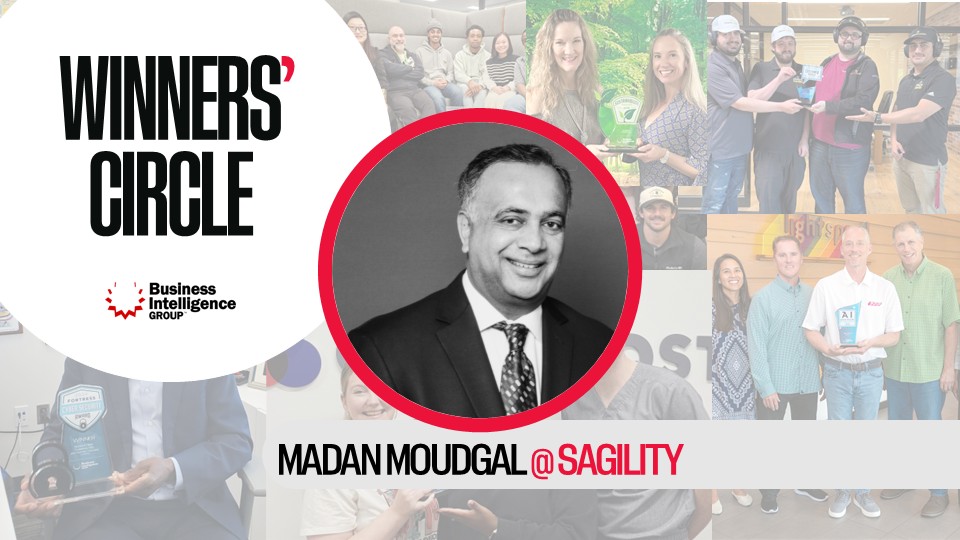
Madan Moudgal, Chief Digital Officer at Sagility, has spent nearly four decades watching healthcare technology evolve. Now his team has built a solution that can cut that review process in half while keeping humans exactly where they need to be: in control of every clinical decision.
The Weight of Prior Authorization
Prior authorization has become one of the most controversial processes in American healthcare. On one side, the industry faces well-documented fraud, waste, and abuse problems that require cost management. On the other, patients and physicians experience a process that delays treatment and contributes to burnout.
The burden is staggering. According to the American Medical Association, practices complete an average of 39 prior authorization requests per physician per week, with staff spending approximately 13 hours on those requests. Nearly 90 percent of physicians surveyed said prior authorization increases burnout, and 88 percent reported it leads to higher overall utilization of healthcare resources.
Research published in Health Affairs Scholar found that if the prior authorization process could be automated and half of registered nurses' time refocused, it would be equivalent to introducing more than 100,000 RNs into the workforce, a significant contribution given projected nursing shortages.
"It's always a fine line," Moudgal explained. "On the one hand, you're trying to contain costs. On the other hand, you're making sure that you're not restricting the patient's ability to get the care that they need."
Augmented Intelligence, Not Automation
Sagility deliberately uses the term augmented intelligence rather than automation. The distinction matters enormously in healthcare contexts where clinical decisions affect patient access to care.
"We don't believe that you can completely automate these processes because decision making, the critical decision making around these requests for authorization need to ultimately be made by a human," Moudgal said. "It would be unacceptable that you would have a virtual agent or a bot making a decision around the need for care."
The company's Nurse Assist solution extracts relevant data points from case documents, including diagnosis, treatment details, and pre-existing conditions. It summarizes and structures that information, compares it to clinical guidelines for the specific service being requested, and provides a recommendation. The registered nurse makes the final decision.
This approach aligns with growing concerns about fully automated decision-making in healthcare. According to the AMA's 2024 survey, 61 percent of physicians expressed concerns that AI either increases or will increase prior authorization denial rates, highlighting the importance of human oversight.
Cutting Review Time by 50 Percent
When a prior authorization request arrives, it must be decided within specific timeframes based on urgency, ranging from a couple of hours to 24 or 48 hours for standard requests. The traditional process consumes enormous time in documentation review.
"A case could take up to an hour, 30 minutes to an hour for it to be addressed in the traditional process," Moudgal said. "We can cut that by 50 percent."
The AI solution annotates medical record documents that can run hundreds of pages, summarizes relevant content, and points reviewers toward specific information relevant to the case. Rather than forcing clinicians to read through everything searching for particular references to medications or diagnoses, the system surfaces what matters.
Research from Penn Medicine on similar AI chart review tools found that clinicians can save up to two hours daily that would otherwise be spent searching through patient records. The technology transforms what was an inefficient manual search into a structured, rapid information retrieval process.
"These documents can run hundreds of pages long at times," Moudgal noted. "It's like looking for a needle in a haystack because you're looking for specific references to certain medications or certain diagnosis within the medical record."
Why Domain-Specific Models Matter
General purpose AI models are getting better at incorporating medical terminology, but Moudgal believes specialized models deliver higher reliability and trust in clinical contexts.
"What we believe is that there's a need for some specialization and an ability to focus in on the types of conversations, on the type of interactions that happen that are very specific to the case at hand," he explained. "That's why we believe that ultimately the models that we develop are going to be more reliable and more trustworthy."
Sagility has operated in healthcare for two decades, building deep domain expertise in how payers and providers actually work. The company's clinical language models are trained on the specific patterns of healthcare interactions rather than general web content.
"It's ultimately a question of trust," Moudgal said. "How much do you trust the system?"
The feedback loop matters too. When a nurse accepts or modifies a recommendation, that action informs the model. Over time, the system improves based on real clinical decisions made by qualified professionals.
Three Elements for Enterprise AI Success
Large healthcare organizations face particular challenges implementing AI solutions. Moudgal identifies three critical elements that determine success or failure.
First, data curation. Healthcare data lives in disparate legacy systems, often without proper context. A table of information might contain the data you need but without metadata explaining what you are actually looking at. That context typically lives in the minds of data analysts who work with the systems daily.
"In order to make your AI more effective, what you need to do is curate the data so that it is, in a sense, prepared for the AI to take action," Moudgal said.
Second, AI governance. Organizations need clear policies about what AI can and cannot do, ensuring any deployed solution aligns with regulatory requirements and organizational standards.
Third, change management. Deploying AI transforms existing processes. Everyone in the workflow needs to understand what they must do differently. If they continue working the old way, the deployment will be disruptive and fail to deliver expected outcomes.
"You need to tackle all of these three elements upfront," Moudgal emphasized. "That ensures the success of your solutions, particularly in a large enterprise."
The Regulatory Landscape
Healthcare AI operates within a complex regulatory environment that continues to evolve. State entities are passing laws defining what can be automated and what requires human involvement. The Centers for Medicare and Medicaid Services plays a significant role in setting standards.
Sagility builds guardrails into its solutions to account for these restrictions. Patient health information must remain confidential, and the system cannot share PHI-specific data with external models. Regulations inform what is possible within each particular process.
"The regulation landscape continues to evolve," Moudgal noted. "We take all of that into account."
Beyond Prior Authorization
The principles behind Nurse Assist extend to other healthcare domains. Administrative interactions, whether voice calls, web chats, or even faxes (which remain surprisingly common in healthcare), present opportunities for AI assistance.
"As long as the virtual agent is answering the question and doing so accurately, I don't think the consumer minds," Moudgal said. "At the end of the day, all I need is I need to know that my question has been fully answered."
Payment integrity represents another significant opportunity. Claims processing requires high accuracy and timely execution. Auto-adjudication rates already exceed 90 percent, but errors still occur. Prediction models and LLM-based systems can help prevent waste from unnecessary payments or overpayments.
According to McKinsey research, broad adoption of AI and machine learning technologies could eventually lead to $1 trillion in annual savings across the U.S. healthcare system by optimizing operations and reducing inefficiencies.
The Speed Versus Safety Balance
Healthcare technology must balance urgency with caution. Everything is happening at warp speed in the AI world, but deploying capabilities in healthcare environments demands careful testing and validation.
"You can't rush it," Moudgal advised. "You have to take your time."
The fundamentals of software development lifecycle remain critical. Testing may be more automated now, but the step itself is still essential. Proof of concepts, small batch testing, and incremental deployment help build confidence before broader rollout.
"Sometimes I feel like I'm being the old foggy in the room trying to keep people's enthusiasm in check," Moudgal admitted. "But I just think that those are very necessary elements."
The next five years will be transformational for healthcare, Moudgal believes. The industry he entered four decades ago will become unrecognizable. But full automation remains unlikely. The complexity of the American healthcare system, combined with the sensitivity of clinical decisions, means augmentation rather than replacement will define the path forward.
"I think it's going to be augmented," he concluded. "Real-time claims adjudication was considered something that was going to happen in the next year. It's been 20 years and it's still not there."
Enjoying insights from industry leaders? Subscribe to The Winners' Circle podcast on your favorite podcast player and never miss an episode. Listen and subscribe at bintelligence.com/podcast.