






Here is something that might make you uncomfortable. That healthcare bill sitting on your kitchen counter right now? There is roughly an 80 percent chance it contains at least one error. And all those voluntary benefits you signed up for during open enrollment because they were only five or ten bucks a month? The ones for accidents, critical illness, hospital stays? There is a pretty good chance you have never actually claimed what you are owed from them.
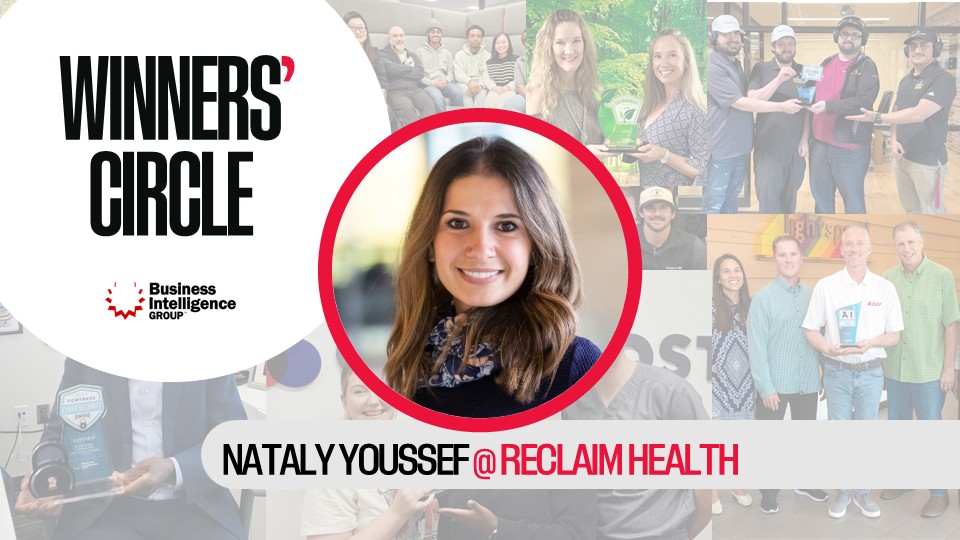
Nataly Youssef, CEO and Founder of Reclaim Health, has built her entire company around a simple conviction that most of us suspect but few actually do anything about. There are dollars in the healthcare system that should be going back to you, the employer, and to you, the employee, but you never realize they exist.
The Scale of What We Are All Missing
When Youssef talks about the problem, she frames it around two major buckets. The first is billing errors, which research suggests affect up to 80% of medical bills in some form or another. The second is voluntary benefits that go completely unclaimed because the systems are siloed and nobody connects the dots.
Think about it this way. You sign up for hospital indemnity insurance during open enrollment. Six months later, you get hospitalized. You are recovering, maybe on disability making less money than usual, trying to get back to your job and your life. And now you are supposed to gather itemized hospital bills, explanation of benefits, physician statements, and injury reports to file a claim for the reimbursement you are owed? Most people just do not do it.
Youssef explained that the funnel breaks in multiple places. It breaks in awareness because people simply do not know they are owed money. It breaks in taking action because even if you know, the burden is on you. And it breaks in documentation, which can take months to complete properly. By that point, many people just give up.
Why This Matters More Than Ever for Employers
Healthcare is the second largest expense on most employers' P&L after salaries, and that cost trend has been running above 8% for the past three years. According to Business Group on Health, projected healthcare cost trend jumped to almost 8% for 2025, the highest amount in more than a decade.
For larger employers who self-insure their employee populations, they are essentially acting as the health insurance company for their people. When employees pay 20% and they pay 80%, every billing error, every unclaimed reimbursement, every inefficiency in the system comes directly out of their budget.
The healthcare benefits recovery AI approach that Reclaim takes is different from what benefit leaders typically see. Most solutions give you a report and put the burden on you to chase the dollars. Reclaim actually files claims on behalf of employees, substantiates them with the evidence from medical claims data, and monitors the process until the check arrives.
Taking the Human Out of the Wrong Loop
Youssef made a point that stuck with me throughout our conversation. For all the talk about AI needing humans in the loop for oversight and judgment, there are plenty of loops where humans should never have been in the first place. Filing insurance claims when you are recovering from a hospitalization is one of them.
Reclaim ingests benefit data, enrollment information, eligibility data, and claims data, which is essentially the 360 degree view of whatever healthcare you have received using your insurance card. Their AI then analyzes 100% of the claims data for 100% of covered lives, not just employees but their dependents too.
What comes out is what Youssef calls the day one report. It identifies billing errors like duplicate billing, wrong billing, upcoding where a higher complexity service is charged than what actually occurred, and adjudication errors. But it also generates a report of how many benefit dollars are owed to the membership, things like FSA dollars that might be forfeited, accident reimbursements, critical illness reimbursements, and hospital indemnity payments.
The inefficiencies Reclaim identifies are equivalent to about 3.5% of total medical spend. That might sound small as a percentage, but when healthcare is your second largest cost and you are trying to keep the trend increase to 4% instead of 8%, that 3.5% is essentially free money with no changes to plan design.
The Fiduciary Problem Nobody Talks About
There is another dimension to all of this that Youssef raised, and it involves the legal obligations employers have to their employees. Under ERISA, the employer group health plan has to ensure that the plan is working to the benefit of the plan participants, not just the business itself.
This creates an interesting problem. If you give an employer a report showing all the inefficiencies and all the dollars owed to employees, but you put the burden on them to act when they do not hold relationships with all the providers, you are actually putting them in a worse position than if they had never seen the report at all.
This is why Reclaim's model of moving from insights to action matters so much. According to a recent Commonwealth Fund report, 45% of insured adults received a medical bill for a service they believed to be covered by their insurance within the last year. And yet only 43% of adults reported that they or their doctor appealed the denial. Among those who did not contest their bills, 54% were unsure if they even had the right to do so.
AI That Does Work For People
Youssef summed up her philosophy in a way that I think gets to the heart of what AI in healthcare should be about. AI should do work for people, not create more work for people. That is how we use AI for good.
Reclaim uses the member advocacy channel to resolve issues, which is clever because the patient is the one entity that has a relationship with everyone. They are insured by their employer, they have plan member support with the carrier, and they have a patient relationship with the provider. By doing the work on their behalf rather than handing them a to-do list, Reclaim unlocks value that would otherwise stay locked away in siloed systems.
The company also helps employers model out plan changes before they make them, simulating strategies and showing what they would actually mean for employees. This helps with change management because benefit leaders can see network disruption, likely adoption rates for new plans, and the actual realized value of benefits they are offering rather than just the actuarial projections.
What Benefit Leaders Should Ask Right Now
For benefit directors and HR leaders who suspect there is unclaimed value in their plans, Youssef had some direct questions they should be asking. First, how many voluntary benefit claims that are not related to wellness have actually been paid out? Not the loss ratio, which includes reserves and other factors, but actual claims for accidents, hospital stays, and critical illness. Most employers do not know the answer.
Second, when sample claims audits are done with consultants, what about all the other claims? And critically, are billing errors affecting employees too, or just the employer's costs?
The vision Youssef painted is one where Reclaim could eventually be in the hands of every American, not just employees of large employers. People on Medicare, people on the ACA, even uninsured individuals negotiating directly with providers. Everyone deserves a financial concierge making sure their bills are accurate and any money owed to them actually gets paid back.
Until then, she is focused on the employer market where access to claims data makes the whole system work without adding friction. No uploading bills, no logging into portals, just actual dollars flowing back to the people who earned them.
Like what you heard? Subscribe to The Winners' Circle on your favorite podcast platform and never miss an episode featuring the innovators reshaping business today.