









For close to three decades, Life Sciences commercial analytics has relied on a labor‑intensive model: consultants moving data across siloed systems, generating reports, and billing by headcount. While other industries modernized, this sector remained largely unchanged.
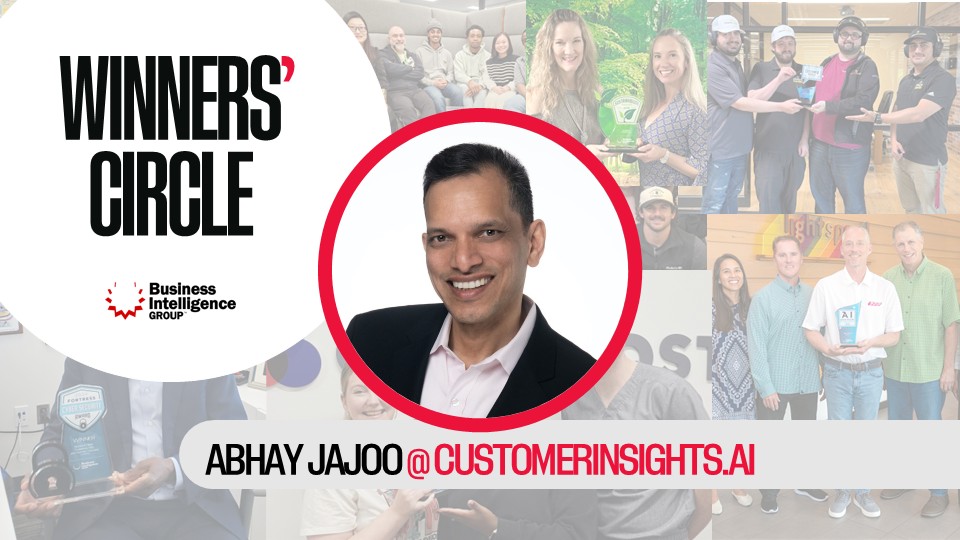
In a recent interview, Abhay Jajoo, Founder and CEO of CustomerInsights.AI (CIAI), explains how his company is challenging this status quo with a hyper‑vertical, agentic AI approach purpose‑built for pharma. His company’s recognition with the 2026 AI Excellence Award highlights a broader shift underway in regulated industries.
The Problem: Slow, Fragmented, and People‑Heavy
Despite advances in data infrastructure, pharma companies continue to rely on manual workflows to answer core commercial questions:
- Which physicians should be targeted?
- Which patients are eligible for treatment?
- How should payer contracts be structured?
These workflows span multiple disconnected systems, with data repeatedly moved rather than analyzed in place. As a result, time‑to‑insight is often measured in weeks and months. By the time insights are delivered, market dynamics—such as prescribing behavior—may already have shifted.
The Solution: A Unified Data + Agentic AI Platform
CIAI addresses this challenge through a tightly integrated two‑layer platform:
- ciPARTHENON™: A unified data platform that ingests, transforms, and analyzes data in a single environment, eliminating silos.
- ciATHENA™: An agentic AI layer that enables users to query data through a conversational interface, instantly surfacing insights.
This architecture fundamentally changes operational speed. Tasks that once required three to four weeks of labor intensive effort are now completed the same day, often within hours of data availability by domain specific agents.
Measurable Impact
The platform’s value is demonstrated through clear operational and financial outcomes:
- 50–60% reduction in analytics costs compared to traditional consulting models
- 5–6% revenue lift in controlled deployments
- Near real‑time insights, replacing multi‑week turnaround cycles
This product‑led outcomes focused model has supported multi‑year enterprise contracts with various clients including several Large Pharma in North America.
Why Hyper‑Vertical AI Wins in Regulated Industries
The broader AI market is dominated by horizontal platforms and general‑purpose agents. CIAI takes a different approach, focusing exclusively on domain and context specific agents.
This strategy reflects the structural complexity of the domain:
- High data variety (claims, EHRs, payer data, formulary data)
- Low data volume relative to consumer sectors
- Extensive regulatory constraints and domain‑specific rules
Generic AI systems struggle to reconcile these factors. Effective solutions require deep domain knowledge embedded directly into the platform—particularly for handling complex edge cases across therapeutic areas.
Rethinking Build vs. Buy
Pharma CIOs are under pressure to deploy AI but face a persistent challenge: whether to build internally or adopt external solutions.
CIAI introduces a hybrid “assisted build” model:
- The platform is 80–90% pre‑built, including workflows and domain logic for most common business use cases with a roadmap that covers the entire spectrum of Life Sciences Commercial Analytics
- Customers retain control over deployment and infrastructure
- Organizations customize the final 10–20% to fit their specific needs
- CIOs and their teams are not wasting time on use case prioritization and valuable token usage costs in “experimentation”
This approach balances speed and control while limiting “experimentation” costs, addressing a key barrier to adoption in regulated environments where fully custom builds often lag behind technological progress.
Implications for the Consulting Model
Agentic AI is also reshaping the economics of consulting. Traditionally, firms relied on a pyramid structure, with large teams of analysts performing data preparation at the base.
According to Abhay, this model is rapidly becoming obsolete. The analyst layer is increasingly replaced by AI agents, shifting the value of consulting toward domain expertise and strategic guidance rather than manual execution.
For consulting and software providers alike, this shift will compress revenue tied to headcount while favoring outcome‑based and usage‑based models.
Key Takeaways for Vertical AI Builders
CIAI’s trajectory offers several clear lessons for companies building AI in regulated industries:
- Focus on well‑defined problems with clear enterprise demand
- Embed domain expertise deeply within the product
- Address compliance and security early, not as an afterthought
- Pre‑build workflows and use cases to accelerate deployment
- Combine AI with human expertise, rather than replacing it entirely
The company’s strategy remains focused: expand within Life Sciences commercial operations rather than diversifying horizontally. With additional use cases emerging in areas like real‑world evidence and clinical trial recruitment, the opportunity for depth remains significant.
Conclusion
The shift from labor‑intensive analytics to hyper‑vertical, AI‑driven platforms represents a structural change in how pharmaceutical companies operate. By combining domain specificity, rapid deployment, and measurable outcomes, CIAI exemplifies how AI can create defensible value in highly regulated industries.
As enterprises move beyond experimentation toward scaled AI adoption, this model—focused, integrated, and outcome‑driven—will become the standard rather than the exception.