





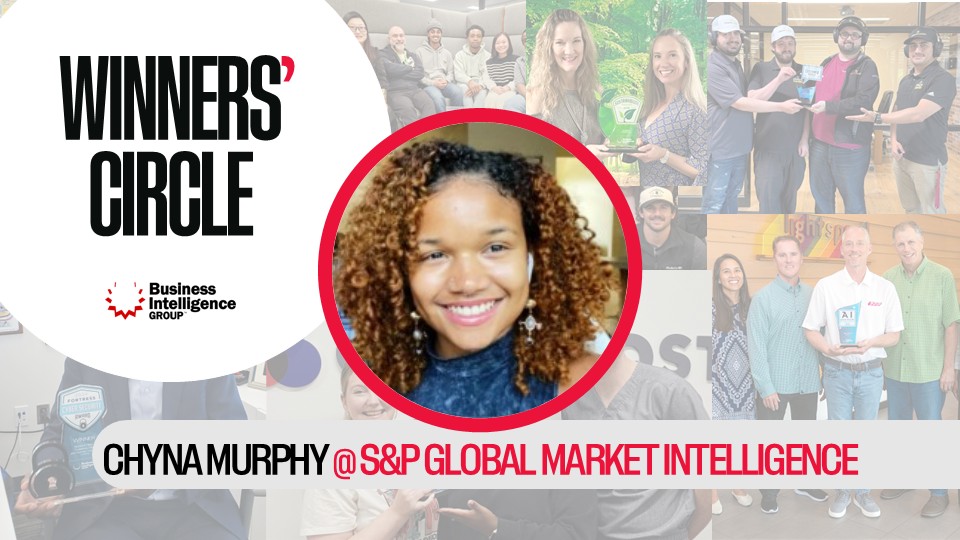

Look, if you had told a financial data marketer five years ago that their next big campaign would involve a Reddit ad buy, a projection mapped room, and a Wikipedia page, they probably would have laughed you out of the conference room. And yet that is more or less exactly what the team behind S&P Capital IQ Pro did, and it just earned them a 2026 Sammy Award for Power Players.
I sat down with Chyna Murphy and four of her teammates from the Kensho Data and Platforms marketing group to talk through the CapIQ Reinvented campaign. What I expected was a story about a big billboard. What I got was something considerably more useful, which is a pretty honest account of a legacy B2B brand figuring out generative engine optimization in real time, while also trying to hit pipeline targets, and admitting out loud that nobody has this fully solved yet.
A Legacy Brand Decided to Reintroduce Itself
The first thing worth understanding is that this was not really a campaign in the normal sense. As Chyna put it, CapIQ Reinvented was a market repositioning effort, built to help clients understand how dramatically the platform had evolved, particularly around AI driven workflows.
That is a harder problem than launching something new, honestly. Everybody already knows the CapIQ name. Nicki Brooks, who is part of the same marketing team out of New York, said the team leaned into that recognition on purpose rather than trying to work around it. The name went right into the tagline. The job was not introducing a product, it was correcting an out of date mental picture that the market already had.
And the market itself has changed underneath everyone. McKinsey research cited in this roundup of B2B commerce data found buyers now move through roughly 6.8 digital touchpoints before a purchase, up from about 4.2 five years earlier. You cannot fix a stale impression with one channel anymore, basically.
SEO Gets You Found, GEO Gets You Referenced
The part of this conversation I keep thinking about came from Louise Jeong, a senior marketing manager based in Seoul who led the AEO and GEO workstream. She started poking at it out of personal curiosity, and then the team started seeing real shifts in web traffic patterns, and at that point it stopped being an experiment and became a business need.
Her framing is the cleanest I have heard anywhere. SEO is about being found. Generative engine optimization is about being referenced. Answer engine optimization is about being the answer itself.
She is also careful to say that GEO is not a total replacement for search. Good, well optimized content is still the foundation. What changes is that you have to think beyond keywords and beyond your own web page, because AI answers pull from media coverage, expert blogs, social platforms, and third party sources like Reddit and Wikipedia. Louise called the goal multi surface visibility and consistency, and that is about as good a summary of the discipline as exists right now.
The data backs her up. A Peec AI study of 30 million sources across ChatGPT, Gemini, Perplexity and AI Overviews found Reddit is the single most cited domain in AI generated answers, followed by YouTube and LinkedIn, with Wikipedia close behind. So the team's Reddit buy, their YouTube tutorial push, and their Wikipedia page effort were not three separate tactics at all. They were one tactic wearing three outfits.
The Billboard Got the Attention, the Webinar Got the Revenue
I asked the question the judges asked in their scoring notes, which was which tactic actually drove revenue versus which one just drove attention. Chyna did not hedge.
The Nasdaq Tower ad in Times Square, the Reddit and LinkedIn and connected TV impressions, the branded coffee cart at Wimbledon, all of that delivered awareness. But the closed opportunities traced back to thought leadership. Their main campaign webinar pulled in over a thousand leads on its own, and a meaningful share of the deals that closed came out of that content, plus third party partnerships with outlets like Morning Brew.
That gap is not a knock on the billboard, by the way. Nicki explained that they plan every big impact campaign against the full customer journey, from cold awareness through to retention, and the Times Square placement was deliberately timed around a student forum happening in a hotel across the street. They sponsored a tour, ran a social takeover, and squeezed a lot more reach out of one buy. Impressions are still part of the story, they are just not the whole story.
Worth noting on channel choice: Reddit is not the fringe bet it used to be. The platform posted $690 million in Q4 ad revenue, up 75 percent year over year, with 121.4 million daily active users. Rosario Quesada, who runs Latin America marketing and led social for the campaign, said it turned out to be the best Reddit campaign S&P Global has run.
Feed the Machines That Answer the Questions
So what do you actually do on Monday morning. Chyna's answer was refreshingly concrete. Build out FAQs on your site so the models have something to pull from. Stand up and maintain a Wikipedia page. And go look at YouTube, because if other people are already making tutorials about your product, you have ceded the explanation of your own tool to strangers.
Her point about efficiency is the one most teams miss. One piece of content can solve multiple problems if you sit and think about it long enough. Those short workflow tutorials reach students scrolling on their phones, and they simultaneously feed the large language models that are now answering questions about your category. Same asset, two jobs.
Timeline expectations matter here too. Louise was blunt that it takes longer than you expect, at least three to six months, because building a brand story that AI systems trust requires product marketing, SEO, web content, comms, and marketing ops all publishing consistently. The marketer becomes the person who connects those teams and keeps one story straight.
The payoff justifies the patience. Analysis of 13 months of LLM referral data found that traffic arriving from AI assistants still makes up under 2 percent of referrals, but it converts at roughly 18 percent, higher than SEO, PPC, or paid shopping. Small channel, tripling year over year, converting better than anything else you run.
What They Would Lean Into Next
Asked what they would double down on, Chyna went straight to video, and her reasoning had a nice twist in it. Yes, video is easy to consume and it performs. LinkedIn reported video creation up 27 percent and video views up 36 percent, with video pulling roughly five times the engagement of other post types. But she also argued that in a feed increasingly full of synthetic content, the fact that there are still tons of humans in the loop producing their videos is exactly what makes them land.
Louise added the other half, which is in person workshops. Across APAC, she said, almost nobody is asking whether AI matters anymore. That conversation matured fast, and clients now show up with practical questions and their laptops open. Digital gets you discovered, and people still want to be in a room with other people.
Which feels like the real lesson from this whole campaign. The team did not pick between reach and intimacy, or between old tactics and new ones. They ran a billboard and a Reddit thread and a webinar and a coffee cart and a Wikipedia page, and then they were honest about which ones did which job.
Congratulations again to Chyna and the entire CapIQ Reinvented team on the Sammy win.
Want more conversations like this one with the people actually doing the work? Subscribe to The Winners' Circle at www.bintelligence.com/podcast.